Vietnamese higher education in the era of AI and global digital transformation
Imagine a future not far away where a student in Hanoi can participate in a virtual laboratory session led by a professor in Singapore, while an AI algorithm recommends the most relevant learning materials tailored to that individual’s needs. This is no longer a distant vision, it is the direction in which global higher education is moving at unprecedented speed.
Yet reaching that destination presents Vietnamese universities with a complex challenge: navigating digital transformation in a high-risk environment where every byte of data holds value and every vulnerability can become an entry point for cyber attackers.
I. THE CURRENT LANDSCAPE: THREE CRACKS IN THE FOUNDATION
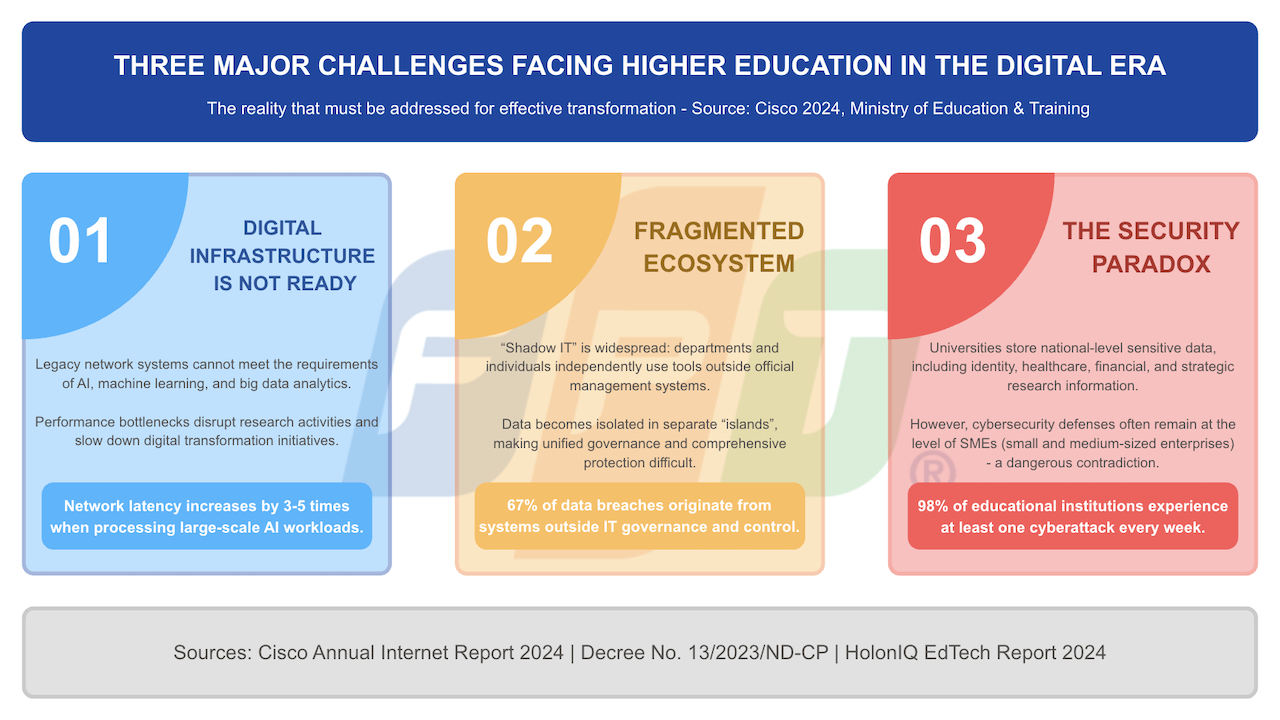
Figure 1: Three major challenges facing higher education in the digital era
According to Cisco’s 2024 report, 98% of educational institutions worldwide experience at least one cyberattack every week, a statistic that gives even the most optimistic observers pause. In Vietnam, the picture is no more encouraging, as many universities continue to operate on aging infrastructures built through multiple generations of disconnected hardware and software investments.
The first and most visible challenge is that digital infrastructure is not yet AI-ready. As machine learning workloads, natural language processing, and big data analytics demand massive bandwidth and ultra-low latency, network environments originally designed for previous technology generations become critical bottlenecks. An AI project involving genomic research or climate simulation may take hours, or even days longer than necessary, simply because the underlying infrastructure cannot support the required computational speed.
The second challenge, less visible but equally dangerous, is what the technology industry refers to as “Shadow IT”, the widespread use of applications and tools outside officially governed systems. A lecturer sharing confidential research documents through a personal account, or a student group exchanging experimental data through an unmanaged messaging platform, may seem harmless on the surface. In reality, such practices create hundreds of blind spots across the institution’s security landscape. Data becomes fragmented into isolated “islands,” making unified governance and comprehensive protection nearly impossible.
Perhaps the greatest paradox lies in the third challenge: universities are custodians of data assets with national-level significance, including identity records for tens of thousands of students, strategic scientific research, healthcare information, and financial data, yet many continue to protect these assets with security architectures originally designed for small and medium-sized enterprises. This is no longer merely a technology concern; it is a matter of national security.
II. TRANSFORMATION: FROM “A SCHOOL WITH COMPUTERS” TO A “SMART UNIVERSITY”
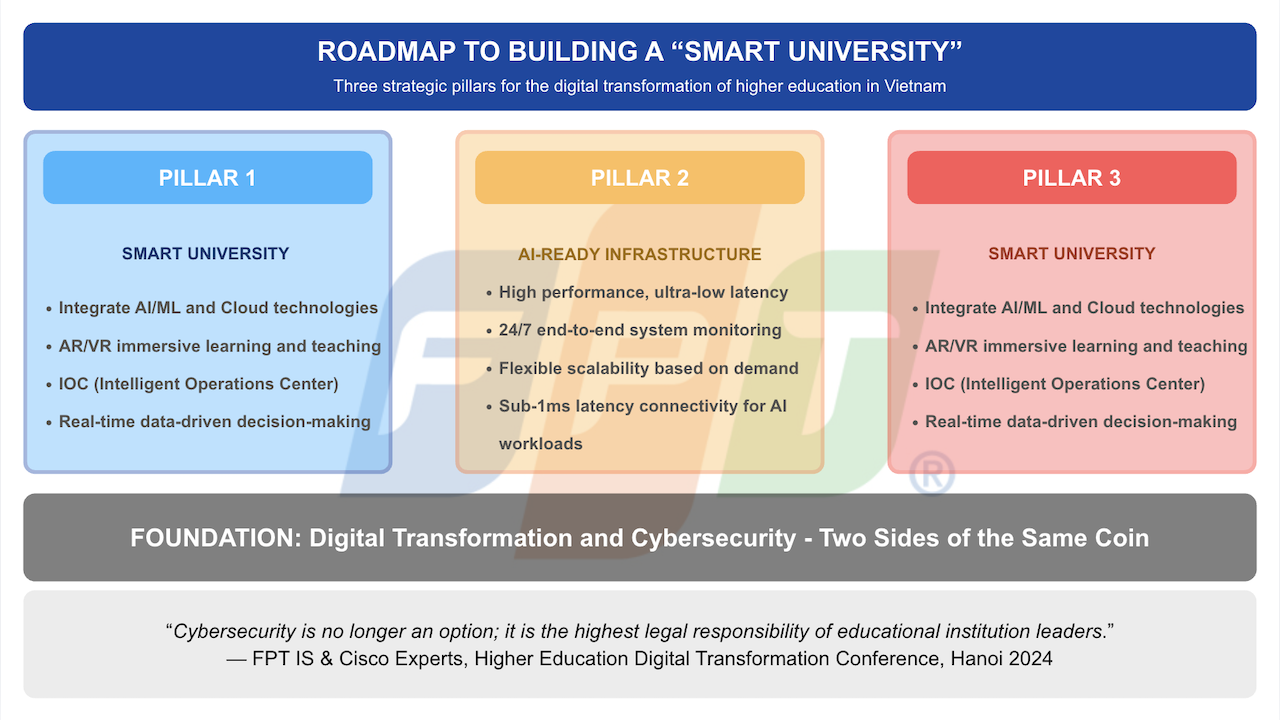
Figure 2: Three strategic pillars for building the smart university model
Recognizing these structural weaknesses, several leading universities across the region have embarked on comprehensive transformation journeys. The experience of the National University of Singapore (NUS) offers a valuable reference point. Rather than simply upgrading equipment, NUS re-architected its entire digital ecosystem, from network infrastructure and data platforms to cybersecurity layers, through a multi-year integrated strategy. As a result, the university can now support large-scale AI research projects in real time while maintaining one of Asia’s highest standards of cybersecurity compliance.
In Vietnam, experts from FPT IS and Cisco recommend a transformation strategy built around three strategic pillars.
The first pillar is the development of the Smart University model, where technology is not a supporting function but the backbone of institutional operations, from administration and governance to teaching and research. At the center of this model is the Intelligent Operations Center (IOC), which functions as the institution’s “control room,” aggregating data from every system, transforming information into actionable insights, and enabling real-time decision-making.
The second pillar focuses on modernizing infrastructure according to AI-Ready standards. This goes beyond purchasing new hardware; it requires redesigning the entire network architecture to deliver high performance, low latency, and full-stack observability. When a deep-learning model must process medical imaging data from 10,000 patients for research purposes, the infrastructure must be capable of supporting the workload without introducing performance bottlenecks.
The third pillar, and arguably the most critical, is the creation of a cyber-resilient security architecture. Rather than relying on traditional reactive defense models that respond after an attack occurs, universities must adopt a Zero Trust approach: “Never Trust, Always Verify.” Within this framework, every device, every user, and every connection must be continuously authenticated, regardless of whether it originates inside or outside the campus environment.
III. CASE STUDIES: WHEN UNIVERSITIES LEARN THE HARD WAY
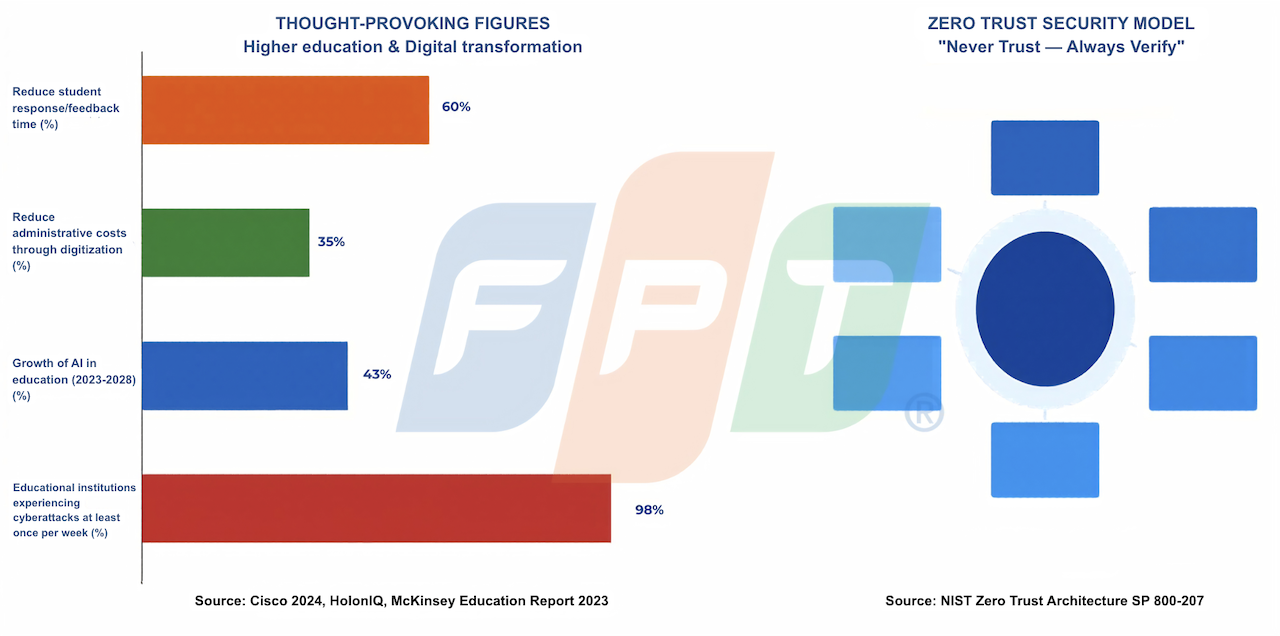
Figure 3: Key statistics and the zero trust security model in higher education
In 2023, Michigan State University (MSU) suffered a major ransomware attack that forced parts of its systems offline for several weeks and resulted in remediation costs reaching millions of dollars. Notably, the vulnerability originated from an IoT device in a laboratory – a network-connected temperature sensor that was not included in the institution’s security monitoring scope.
The lesson was not simply that better firewalls were needed. Rather, it underscored a broader reality: in a digital environment, every connected endpoint represents a potential attack surface.
In Asia-Pacific, the Australian National University (ANU) breach of 2019 delivered an equally sobering wake-up call. Attackers infiltrated university systems and silently extracted sensitive defense-related research data for six months before detection. The damage extended far beyond financial losses; it undermined years of scientific investment and competitive advantage.
These incidents are no longer theoretical warnings. They represent real-world scenarios that any educational institution may face.
“Cybersecurity is no longer an optional consideration, it is the highest legal responsibility of educational institution leaders. The future of digital education must be built upon a foundation of transparent and resilient security.”
– FPT IS & Cisco Experts, Hanoi Higher Education Digital Transformation Conference 2024
IV. LEADERSHIP RESPONSIBILITY: FROM AN OPTION TO AN OBLIGATION
At a recent higher education digital transformation conference in Hanoi, representatives from FPT IS and Cisco agreed on a fundamental principle: cybersecurity is no longer solely the responsibility of the IT department. It is a legal and strategic responsibility that belongs to institutional leadership.
Under Vietnam’s Decree No. 13/2023/ND-CP on Personal Data Protection, organizations that process personal data, including educational institutions, bear explicit legal accountability for data breaches and compliance failures. As a result, university presidents today must understand more than curricula and academic research; they must also possess a working knowledge of digital risk management principles.
In this context, digital transformation and cybersecurity are not parallel strategies. They are two sides of the same shield.
A university that invests heavily in AI while neglecting cybersecurity is akin to constructing a skyscraper without verifying the integrity of its foundation. Conversely, a security strategy developed in isolation from digital transformation initiatives will quickly become obsolete as threat landscapes continue to evolve.
CONCLUSION: THE FORTRESS OF THE NEXT ERA
The question is no longer whether Vietnamese higher education should pursue digital transformation, the answer is already clear.
The real question is how institutions can transform without turning technological advancement into new vulnerabilities, and how the nation’s “fortresses of knowledge” can evolve into “fortresses of transparency,” where innovation and protection coexist; where data is leveraged to advance education and research while being safeguarded to the highest standards.
The journey is undoubtedly challenging. Yet with the right roadmap and strong leadership commitment, it is entirely achievable, and it can no longer be postponed.
In the global competition for talent, research excellence, and innovation, the universities that successfully combine the speed of digital transformation with the depth of cybersecurity resilience will be the ones that attract top talent, produce impactful research, and contribute meaningfully to the sustainable development of the nation.
| Exclusive article by Ms. Ha Thi Hanh
|
REFERENCES
- Cisco Annual Internet Report 2024.
- HolonIQ Global Education Technology Market Size Report 2024.
- NIST Zero Trust Architecture SP 800-207.
- Vietnam Government Decree No. 13/2023/ND-CP on Personal Data Protection
- McKinsey & Company — The Future of Higher Education (2023)
- FPT IS & Cisco — Higher Education Digital Transformation Conference, Hanoi 2024