Rice Alternatives: Cutting Methane in Vietnam’s Fields
Rice is more than a staple in Vietnam, it is a symbol of culture, livelihood, and national pride. Being at the center of Vietnam’s identity yet beneath its flooded fields lies an invisible problem: methane.
As one of the top global rice exporters, Vietnam’s paddies account for nearly half of its agricultural greenhouse gas emissions. Methane from continuously flooded fields traps much more heat than Carbon Dioxide. Reducing is not just an environmental necessity; it is an opportunity to modernize farming, cut costs, and build resilience against climate change.
At VertZéro, we help agricultural producers and local government measure, manage, and reduce greenhouse gas emissions. Through carbon accounting, data-driven analysis and pilot programs, we support the shift towards a climate-smart and low-emission rice systems across Vietnam.
Why flooded rice emits methane
Traditional rice farming keeps fields permanently flooded. In those oxygen deprived conditions, soil microbes break down organic matter and release methane gas. The longer the rice fields remain submerged, the more methane will be produced. Managing water differently will allow shorter dry periods, and farmers will be able to reduce methane emissions while maintaining yields.
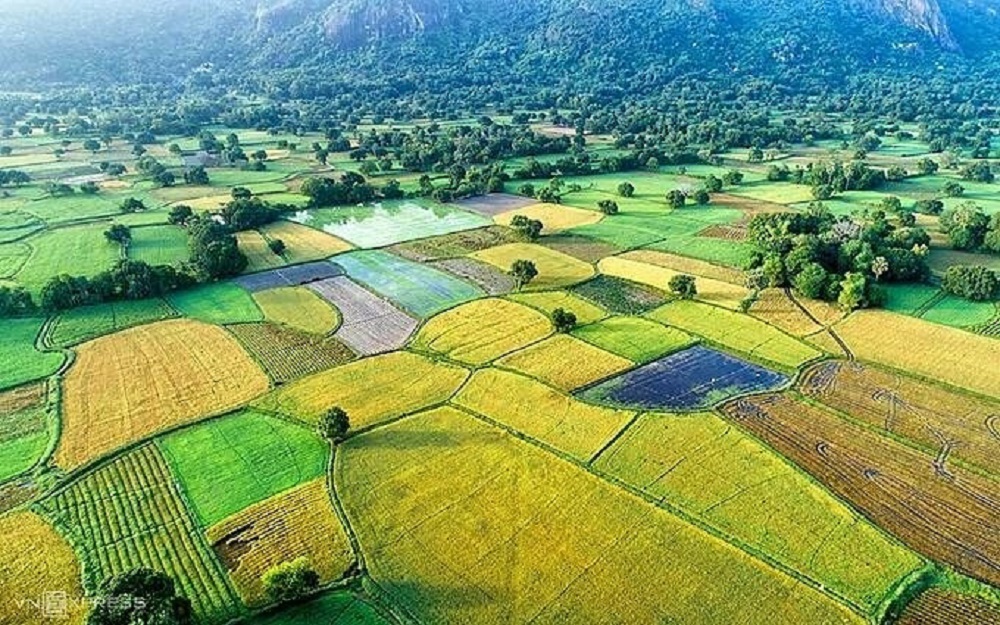
Paddy rice fields in Mekong Delta, Vietnam, received support from VertZéro to implement the AWD. (Source: VnExpress)
Alternatives for cutting methane
Across Vietnam, farmers and cooperatives have been testing practical, low-cost methods to reduce the methane released without compromising on productivity. Among these, four approaches stand out thanks to their feasibility, accessibility, and proven results.
Alternate Wetting and Drying (AWD) is one of the most effective methods. Instead of keeping fields permanently flooded, farmers let water levels drop below the soil surface for several days before reflooding. This simple change can cut methane emissions by up to 50%, saving 15-30% of irrigation water, and reducing pumping cost. With basic water-level monitoring tools, farmers can easily manage timing while maintaining stable yields.
Another practical option is mid-season drainage, a simplified version of AWD that involves drying fields once or twice per season. This short drainage period enhances root health as it interrupts methane production without requiring major irrigation upgrades. If farmers work together, the mid-season drainage will be faster and measurable benefits come with it.
Straw and residue management is another option that plays a critical role. Instead of using fresh straw in flooded soils, which increases methane released, farmers can either remove, compost or repurpose it as livestock feed or biomass fuel. These practices can prevent up to one-fifth of methane emissions from decomposing residues while adding economic value to what was once considered waste.
Finally, crop rotation and diversification allow farmers to switch out rice with dry season crops like maize, legumes or vegetables. This not only reduces methane but also diversifies incomes streams, improves soil fertility, and enhances resilience to drought. Diversified systems depend less on water and help farmers adapt to changing climate and market conditions.
The Benefits and Barriers
The benefits of these four practices go beyond emissions reduction. Long-term productivity will support farmers if they are able to see direct gains in water, fertilizer efficiency, lower energy costs, and healthier soils. New income opportunities will also be created through diversification and residue of reuse, through alternative crops.
In the agricultural industry, lower methane intensity supports compliance with emerging sustainability regulations such as the EU Carbon Border Adjustment Mechanism (CBAM) and enhances competitiveness in climate-conscious supply chains. Pair it with verified carbon accounting, it will open doors to carbon credit programs and sustainability linked finance, ultimately transforming climate action into measurable business value.
However, shifting to low-methane rice is not easy. Little irrigation infrastructure, and knowledge gaps remain persistent barriers. Many farmers also lack access to training, monitoring tools, and reliable market linkages for alternative crops and residues. Financing transition costs are also difficulties without dedicated incentives.
On the political side, Vietnam’s government has shown clear intent to reduce methane under its Nationally Determined Contributions and the Global Methane Pledge. However, translating this ambition into action requires stronger coordination and support mechanisms. Key priorities include expanding training programs for farmers, upgrading the irrigation and drainage systems, developing carbon finance frameworks, and building data-driven verification systems for agricultural emissions.
Barriers and policies are different, one local and operational, the other structural and regulatory, but they must advance together. Only through bridging field-level practice with enabling policy will Vietnam be able to unlock its full potential of climate-smart agriculture.
VertZéro’s role in enabling change
VertZéro works at the intersection of data, policy, and practice to accelerate the transition toward low-emission agriculture. We partner with cooperatives, agribusiness, and local governments to measure methane reductions, design pilot projects, and create pathways to verify carbon finance. Our solutions integrate seamlessly with ESG reporting systems and align with Vietnam’s national net-zero targets.
By turning emission data into actionable insights, VertZéro ensures that sustainability efforts are measurable, transparent, and rewarding for both policymakers and producers.
A modern path for a traditional crop
Cutting methane from Vietnam’s rice fields do not mean abandoning heritage but to modernize it with smarter management. Practices like AWd, mid-season drainage, residue reuse, and crop diversification demonstrate that meaningful climate impact starts right in the [addies/ With collaboration between farmers, business, and policymakers, Vietnam can maintain its global rice leadership while building a greener, more resilient future.
At VertZéro, we believe sustainability begins where data meets the field. Together, we can turn every hectare of rice into a climate solution.
If your organization is ready to explore low-emission rice farming, pilot projects, or carbon accounting partnership, contact VertZéro today.
| Exclusive article
by JOO FAITH CHNG SIN – Members of the VertZéro Greenhouse Gas Inventory solution |