Legal requirements for E-labor contracts: Critical insights for enterprises
| Key highlights of Decree 337/2025/NĐ-CP
On December 24, 2025, the Government issued Decree 337/2025/NĐ-CP, which provides comprehensive regulations on the execution and implementation of electronic labor contracts (e-labor contracts), as well as the development and management of e-labor contract platforms. This decree establishes the legal framework for deploying e-labor contracts in Vietnam, marking a pivotal milestone in the digitalization of workforce management. |
A common misconception during the deployment of e-contracting systems is that simply signing via email or applying a signature to a PDF constitutes a legally binding electronic contract.
In reality, not all forms of online signing meet the legal criteria to be recognized as a valid e-labor contract. Under current regulations and the strategic direction of Decree 337/2025, for an electronic contract to possess full legal validity, it must satisfy a specific set of technical conditions and procedural workflows.
Grasping these requirements will enable enterprises to mitigate legal risks and build compliant systems from the outset, avoiding costly retrospective adjustments.
Why does online signing not always equal legal validity?
In the modern workplace, remote signing has become a standard practice. Many businesses are accustomed to emailing contract files, asking employees to print, sign by hand, and return a scanned copy. Others use an image of a signature inserted directly into a PDF.
However, legally, these methods may not meet the requirements for an e-labor contract. The distinction lies in the fact that an electronic contract is not merely a digital document, it is an electronic transaction that must guarantee identity authentication, data integrity, and verifiable timestamps.
Without a robust authentication mechanism or an accurate record of the signing time, contracts are vulnerable during disputes. This is why new regulations prioritize technical integrity over mere visual representation.
From a systems implementation perspective, the difference between a standard online file and a legally valid e-contract resides in the underlying data processing workflow.
Requirements for Valid Digital Signatures
One of the most critical conditions for a legally valid e-labor contract is the use of a valid digital signature.
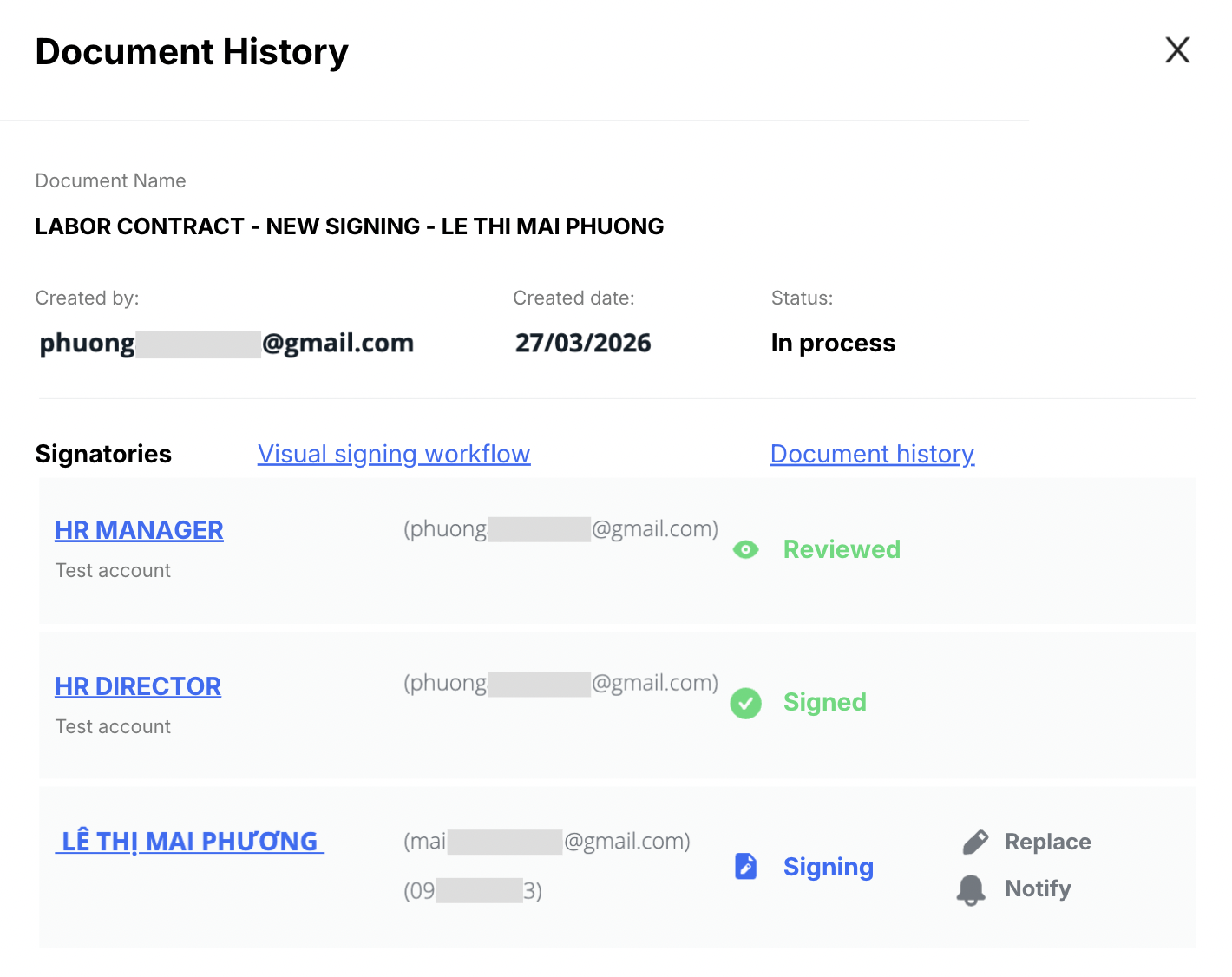
A digital signature is far more than a signature image, it is an encryption mechanism that uniquely identifies the signatory. When a contract is executed with a valid digital signature, the system can verify the identity of the signer and ensure that the content remains unaltered post-signature.
In practice, integrating digital signatures into e-contracting systems must adhere to specific technical standards. This includes selecting a Certificate Authority (CA), establishing signing protocols between parties, and ensuring the signatures can be validated whenever necessary.
For enterprises, preparing digital signature infrastructure is a vital step in any enterprise’s e-labor contract roadmap.
The role of Timestamps
In tandem with digital signatures, timestamps are essential components for determining the exact moment of execution.
A timestamp serves as definitive evidence of the transaction time, recording precisely when the digital signature was generated. This is particularly crucial when determining the contract’s effective date or resolving legal disputes.
In advanced e-contracting systems, timestamps are typically applied automatically upon completion of the digital signature. Integrating timestamps into the workflow not only ensures regulatory compliance but also enhances the transparency of the entire execution process.
Technologically, this component must be seamlessly synchronized with the digital signature system to maintain data integrity.
Electronic Know Your Customer (eKYC)
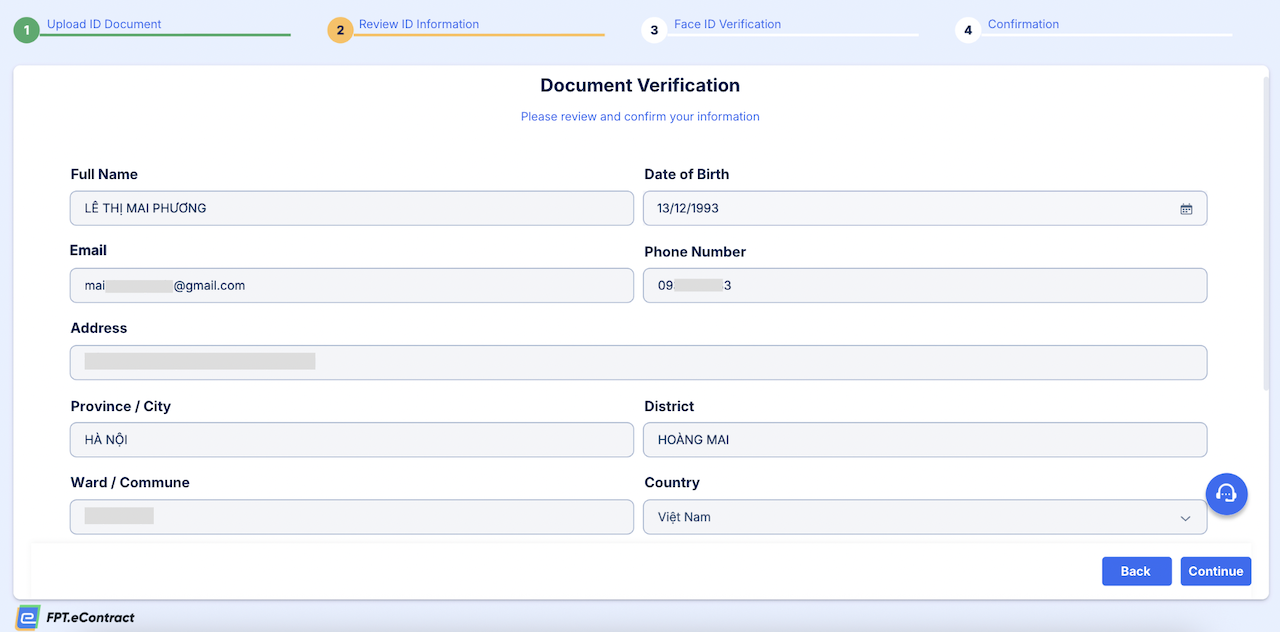
Signatory identity verification is an increasingly vital factor before proceeding with contract execution.
In traditional environments, identity is verified via physical documents. In the digital realm, however, this must be conducted through technological solutions such as electronic identification or eKYC.
eKYC verifies an employee’s personal information using government-issued IDs or biometric data. When integrated into the signing workflow, eKYC ensures that the individual executing the contract is indeed the intended party.
In many deployment projects, eKYC acts as the first gate, minimizing risks related to identity fraud and bolstering the contract’s legal standing.
Data message certification
Under electronic transaction laws, an e-labor contract is classified as a data message. Therefore, data message certification is a critical condition for validity.
This certification ensures that the contract content is created and stored with total integrity, preventing unauthorized modifications during transmission or storage.
In practical terms, e-contracting systems must maintain a comprehensive audit trail, document version control, and data retrieval capabilities.
While often overlooked during initial phases, these technical elements are fundamental to the long-term legal viability of the contract.
Retention and storage requirements
Post-execution, the storage of data is equally critical to maintaining legal value.
E-labor contracts must be stored in appropriate formats that allow for retrieval throughout the legally mandated retention period. Storage systems must also ensure data security, preventing loss or unauthorized access.
For large-scale enterprises, storage requirements extend beyond simple file keeping; they involve searchability, classification, and integration with Human Resource Management systems.
Therefore, selecting a robust storage architecture from the start mitigates operational risks over the long term.
National management platform and contract IDs
A notable highlight of Decree 337 is the requirement to submit e-labor contracts to a government management platform for the assignment of a unique contract ID.
This ID ensures each contract has a singular identifier, supporting labor data management and increasing informational transparency.
For system implementation, this necessitates that e-contracting platforms possess integration capabilities with external government systems. Designing for this interoperability now will give enterprises a head start when official technical specifications are finalized.
Preparing for forthcoming circulars
It is important to note that detailed circulars are expected in the near future to clarify technical criteria and deployment procedures further.
These guidelines may specify standards for digital signatures, identity verification methods, or data formats for submission to the national platform. Consequently, enterprises should adopt a flexible implementation approach, choosing platforms capable of evolving alongside legislative changes.
In the long run, correctly understanding and preparing for these legal conditions not only ensures compliance but also builds a solid foundation for the future of digital workforce administration.
Enterprises may look to proven deployment models and specialized solutions like FPT.eContract to develop a roadmap tailored to their specific organizational needs.
| Exclusive Article by FPT Corporation Experts
Le Thi Mai Phuong E-Contract Solution Expert BIT MOTION Digital Platform Creation Center, FPT IS, FPT Corporation |