Electronic labor contracts under Decree 337/2025: What enterprises should prepare now
| What is an electronic labor contract? An electronic labor contract is a contract established in the form of a data message, with the same legal validity as a paper-based labor contract under Decree 337/2025/ND-CP.This format enables enterprises to execute, store, and manage contracts entirely in a digital environment, eliminating dependence on traditional paper-based processes. |
When labor contracts are no longer paper-based
For many years, labor contracts across numerous Vietnamese enterprises have followed a familiar workflow: printing, handwritten signatures, physical delivery, and archival storage. This model works reasonably well at a small scale but quickly becomes a bottleneck as organizations grow.
In large organizations, contract execution can take days simply due to reliance on manual signing workflows. The fragmented records make retrieval difficult, while operating costs increase with the number of employees.
Against this backdrop, the need to transition to electronic contracts and online labor contract signing has been evident for some time. However, large-scale adoption has required a clearer legal framework.
The introduction of Decree 337/2025/ND-CP marks a significant milestone. For the first time, electronic labor contracts are explicitly regulated, laying the foundation for enterprises to transition toward digital operating models.
Although the decree has not yet taken effect and further implementing circulars are expected, many organizations have already begun early exploration and preparation.
What does Decree 337/2025 stipulate for electronic labor contracts?
Decree 337 defines a set of principles and conditions under which electronic labor contracts are legally valid. From a technology and implementation perspective, these requirements translate into core components of an eContract platform.
First is the requirement for digital signatures. This is not merely a signing action but a mechanism for identity authentication in a digital environment. Valid digital signatures ensure the correct parties are involved in contract execution.
Next is timestamping. In a digital context, the signing time must be accurately recorded and immutable. Timestamps ensure the integrity of the contract at the moment of execution.
Another critical element is data message authentication, which guarantees that contract content remains unchanged and verifiable when needed.
In addition, the decree introduces the concept of a contract identifier (ID). After execution, contracts must be transmitted to a management platform to be assigned a standardized ID. This signals a broader direction toward building a unified labor data infrastructure in the future.
How does the electronic labor contract signing process work?
In practice, electronic contract signing is not simply about signing a PDF file, it is a controlled data processing workflow.
Typically, contracts are generated from an HR management system. Employees are authenticated through electronic identity verification methods, after which the system orchestrates a signing workflow between parties.
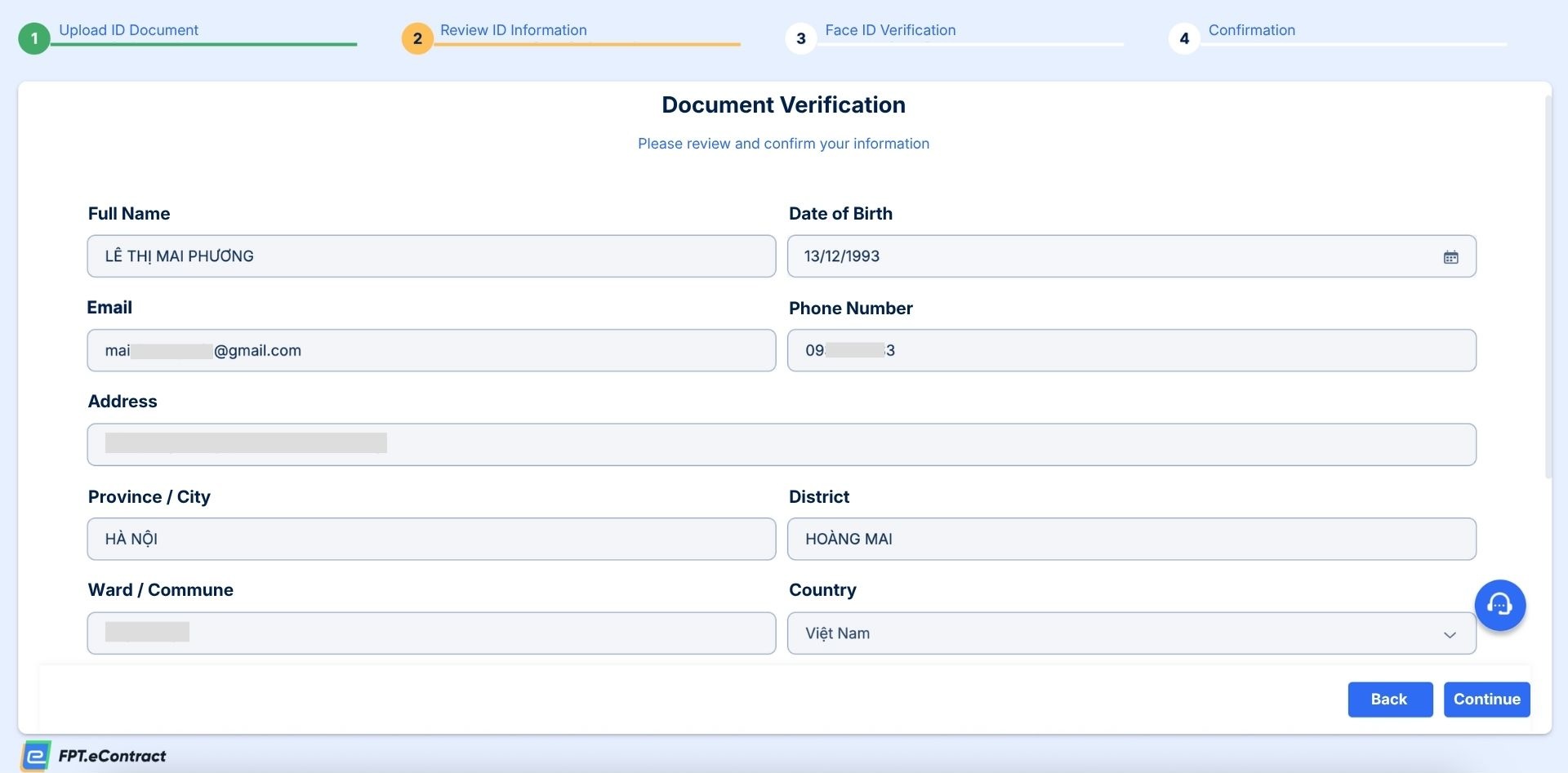
Verify information using technology
The signing process is executed using digital signatures, accompanied by timestamps to record the exact moment of signing. Contract data is then authenticated and stored as structured data messages.
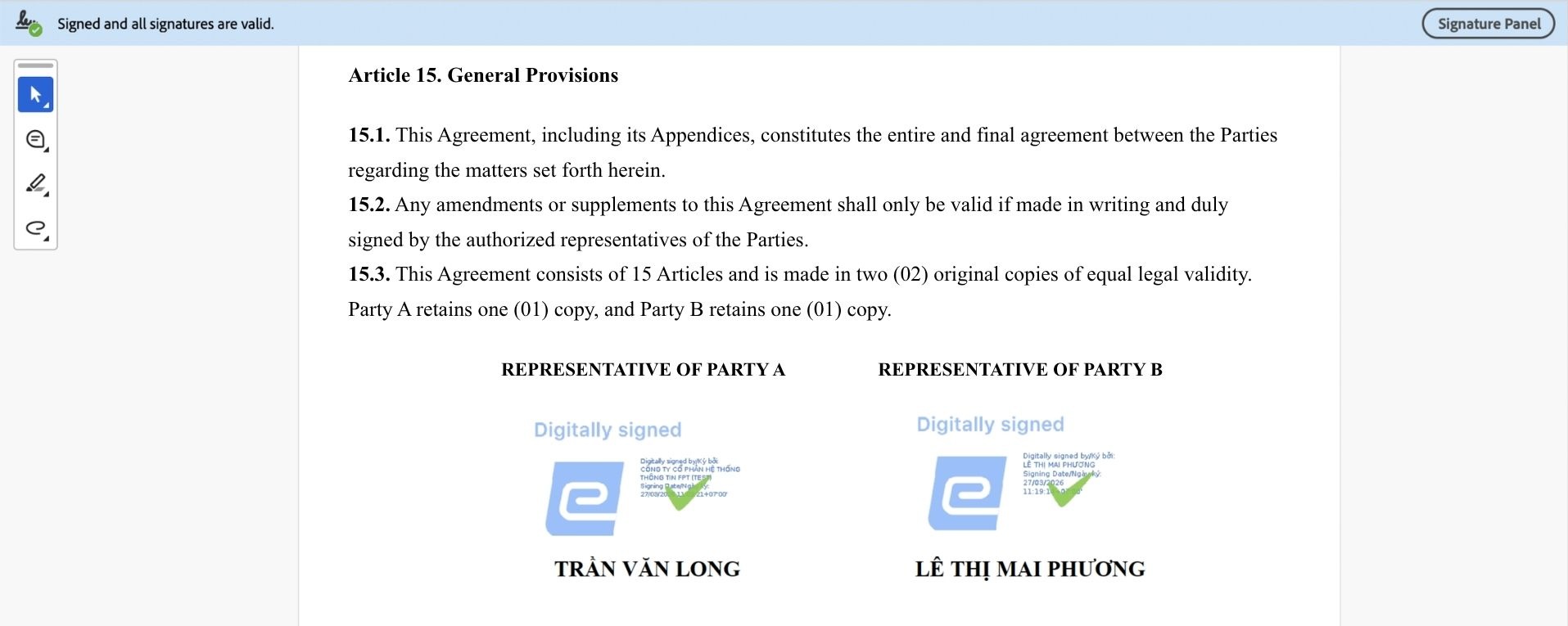
Figure illustrating the signature flow
In line with Decree 337, the next step is to transmit contract data to a management platform for ID assignment.
The key distinction from traditional processes is that the entire workflow can be monitored in real time, significantly reducing reliance on manual intervention.
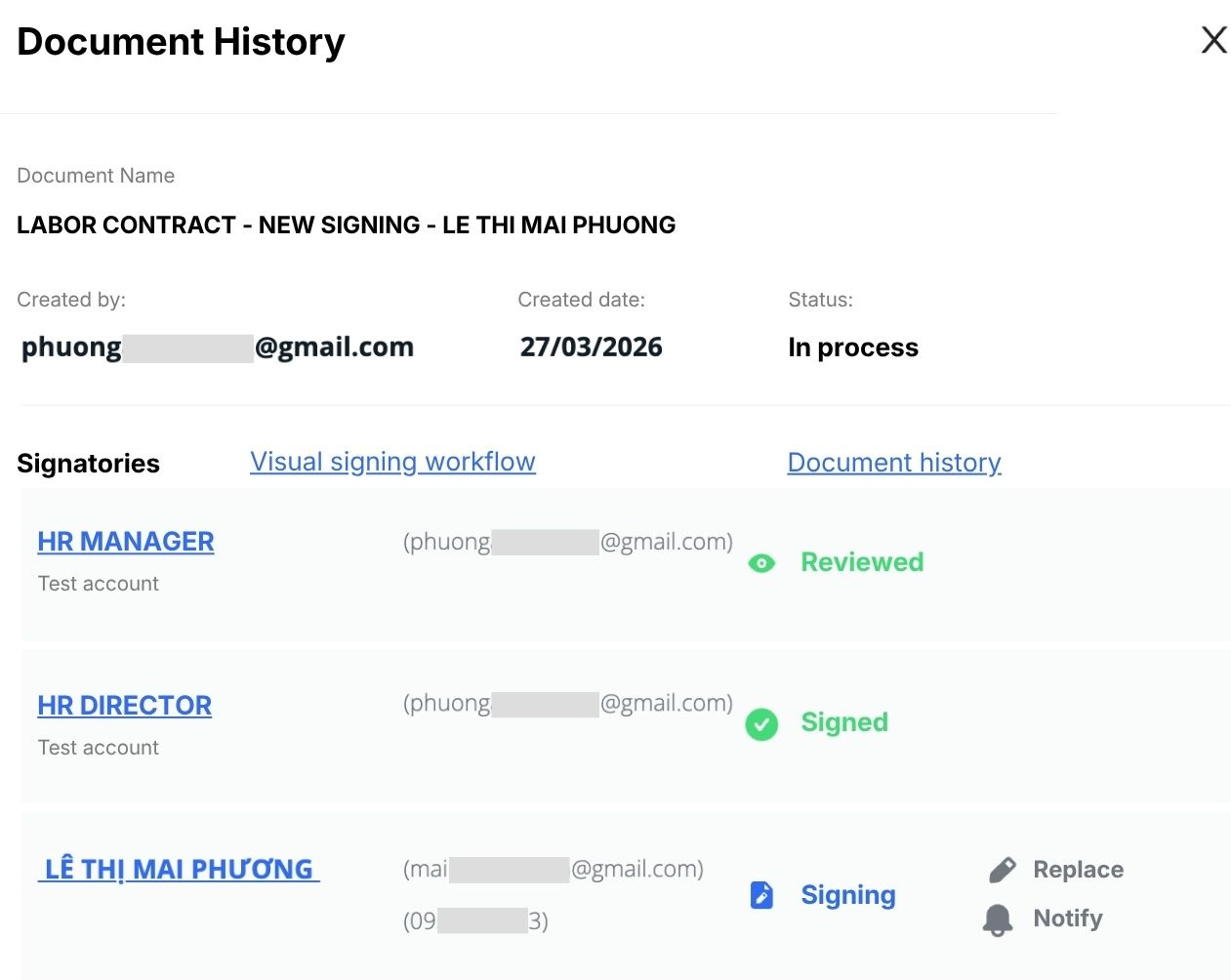
The signing process was clearly demonstrated
Why are enterprises shifting to electronic contracts?
Interest in electronic labor contracts is driven not only by regulatory compliance but also by operational optimization.
As workforce scale increases, managing paper contracts becomes increasingly complex. Signing cycles lengthen, printing and storage costs rise, and information retrieval becomes inefficient.
Electronic contracts shorten execution time while enabling centralized data management – an essential capability for enterprises undergoing digital transformation.
In practice, many organizations in Vietnam have already adopted eContract platforms. Notable examples include companies using FPT.eContract such as Vinamilk, Goertek, Wistron, Sumi Hanel, Xanh SM, Sun Group, KFC Vietnam, Tiki, Sonion Vietnam, MoMo, Prudential Vietnam, and VNPay.
Despite operating across different industries, these organizations share a common need: optimizing processes and managing data at scale.
What should enterprises prepare?
At this stage, while the decree is not yet in force and detailed guidance is pending, immediate implementation is not mandatory. However, early preparation will ensure a smoother transition.
The first step is to review existing workflows and identify manual dependencies. In parallel, enterprises should standardize contract data structures and templates.
Technology infrastructure also needs to be assessed, particularly HR systems and their ability to integrate with external platforms. In many cases, implementing electronic contracts will require specialized solutions.
Currently, electronic labour contract platforms such as FPT.eContract are being developed to align with existing legal frameworks. These solutions support signer authentication, digital signatures, workflow orchestration, and secure data storage. At the same time, they are being designed to accommodate future regulatory requirements as detailed guidelines are issued.
What should businesses do now?
Electronic labor contracts are not simply about replacing paper with digital files, they represent a shift to a data-driven contract management model.
As Decree 337/2025 continues to formalize the legal framework, enterprises can begin by understanding regulatory requirements, assessing current workflows, and preparing appropriate technology infrastructure. Selecting an eContract platform should be based on its ability to meet compliance requirements and integrate seamlessly with existing systems.
Conclusion
Decree 337/2025/ND-CP signals a clear trend: labor contracts are transitioning from paper-based processes to digital environments.
While detailed implementation guidelines are still forthcoming, now is the right time for enterprises to prepare. Organizations that proactively digitize their processes will gain a significant advantage once regulatory requirements are formally enforced.
In the long term, electronic labor contracts will not only optimize operations but also become an integral component of enterprise HR data management ecosystems.
_____
For more information about the FPT.eContract solution, visit FPT eContract
_____
| Exclusive article by FPT Group expert Le Thi Mai Phuong FPT eContract Solution Expert BIT MOTION Digital Platform Center, FPT IS, FPT Corporation |