Key highlights
- 187,000+ TSA candidates participated in computer-based testing as of 2026
- 32 simultaneous online testing sites across 12 provinces and cities nationwide
- IRT (Item Response Theory) applied for standardized competency assessment
- 60% reduction in manpower required for deployment and administrative preparation
- Candidate identity verification completed in 12 seconds with 100% accuracy
Project overview
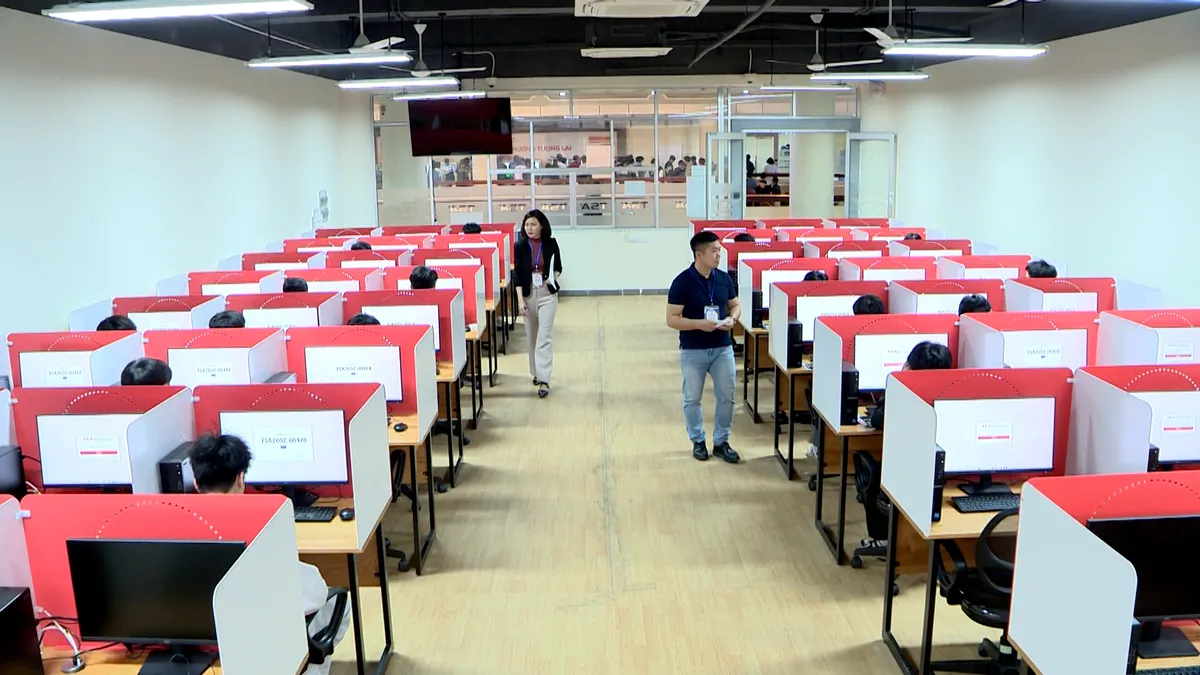
Amid the rapid acceleration of digital transformation in education, the TSA (Thinking Skills Assessment) exam of Hanoi University of Science and Technology (HUST) has been operated as a large-scale modern digital assessment system. Since 2021, FPT IS has partnered with HUST to research and deploy the independent examination platform Khaothi.Online; by 2023, the TSA officially transitioned to a centralized computer-based testing model across multiple testing locations nationwide.
Behind the seamless check-in process, computer-based testing experience, and transparent score reporting lies a system capable of simultaneously meeting strict requirements for exam security, candidate authentication, anti-cheating, real-time monitoring, and data traceability. As such, TSA is not merely a technology-enabled examination, but a major step toward building a standardized assessment model in Vietnam: measuring competencies using scientific methodologies, operated under tightly controlled processes, and supported by a technology platform capable of managing large-scale high-stakes examinations.
Customer
Hanoi University of Science and Technology is one of Vietnam’s leading technical universities and a pioneer in innovating university admissions and competency assessment models.
The TSA exam was launched in 2020, aiming to establish a thinking-skills assessment model aligned with Vietnam’s general education curriculum while approaching international standardized testing models such as the SAT and ACT. Currently, TSA results are accepted by approximately 50 universities nationwide for admissions purposes.
Challenges
Organizing a large-scale thinking-skills assessment exam is far more complex than simply digitizing a paper-based test. HUST required a platform capable of managing the entire examination lifecycle, including registration, payment processing, profile management, scheduling, question bank management, test generation, examination delivery, candidate authentication, proctoring, grading, real-time reporting, and advanced data analytics.
The examination needed to be conducted simultaneously across multiple testing centers, sessions, and localities while ensuring system stability, data security, exam confidentiality, candidate identity verification, correct session allocation, and full traceability. At the scale of tens of thousands of candidates, the challenge was not only handling high system loads but also controlling risks throughout the entire examination process.
Solution
FPT IS deployed the Khaothi.Online platform, establishing a fully integrated TSA examination process on a unified technology platform. The platform supports all critical stages of the examination lifecycle, including registration, payment, profile management, question bank development, test generation, scheduling, examination delivery, citizen ID verification, monitoring, grading, certification issuance, candidate portals, operational reporting, and post-exam data analytics.
Khaothi.Online is designed with a microservices architecture, enabling scalable processing capacity during traffic surges, supporting large-scale operations across multiple testing centers, and operating on independent data centers to enhance system stability and disaster recovery capabilities. At the assessment layer, the question bank and test management system operate independently from the examination operations system. The question bank is developed and analyzed using Item Response Theory (IRT) – a modern methodology in measurement science and competency assessment – allowing exam results to more accurately reflect candidates’ thinking abilities rather than merely counting correct answers.
To ensure exam security, the test development process is separated from examination operations. Test content is managed, randomized, packaged, and encrypted under strict control procedures, ensuring operational personnel do not directly access exam content.
At the authentication and anti-cheating layer, Khaothi.Online integrates the FPT.IDCheck solution and utilizes FPT.IDReader devices to verify citizen identity cards against the Ministry of Public Security’s National Population Database, perform facial authentication, and synchronize and enrich candidate profiles within a short timeframe. This process ensures the right candidate takes the right exam while creating a unified, complete, and verifiable data source for invigilators, inspectors, and examination councils, moving toward a “unified, shared,” “accurate – complete – clean – live” data model.
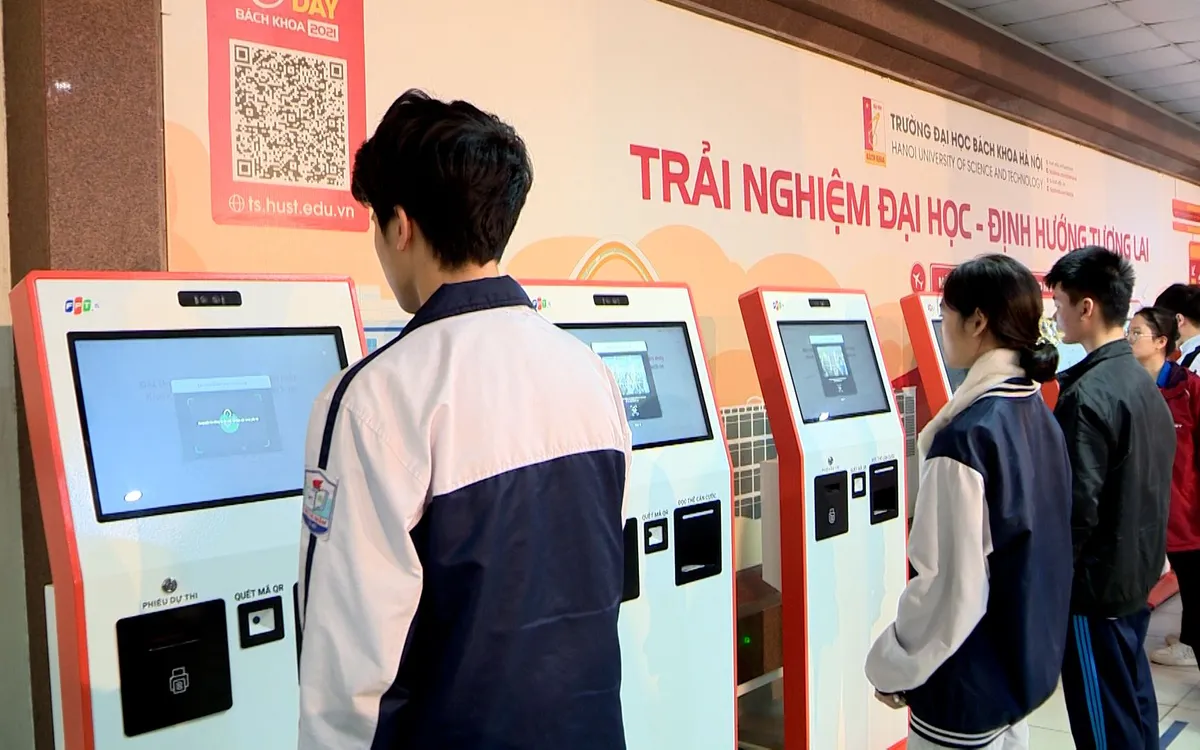
In 2026, a self-service kiosk check-in model was deployed at Ta Quang Buu Library, enabling candidates to independently scan codes, complete authentication, receive seat assignments, and enter examination rooms.
The entire examination process is centrally coordinated and managed. From the operations center – functioning similarly to an “air traffic control tower” – the operations team can monitor the status of testing centers, supervise real-time data, and remotely support incident resolution whenever issues arise.
Speaking on the 7 PM News program on VTV1, Associate Professor Dr. Nguyen Phong Dien, Vice President of Hanoi University of Science and Technology, shared:
“We strive to adopt advanced assessment methodologies and technologies from around the world with the goal of enabling the higher education community to select candidates whose competencies are appropriate for this level of education.”
Results
As of 2026, the system has supported more than 187,000 TSA candidate participations; in 2026 alone, nearly 60,000 candidates were recorded, with peak testing periods organized simultaneously across 32 testing sites in 12 provinces and cities nationwide.
The examination process has been significantly optimized: preparation time for each testing round has been reduced, while deployment and administrative preparation processes have helped save over 60% of manpower compared to traditional methods.
Candidate experience has also improved through faster check-in, authentication, and examination room entry procedures, reducing congestion at crowded testing sites. From an operational perspective, the system supports real-time monitoring, activity logging, and answer data tracking, enhancing overall control, traceability, and incident handling capabilities throughout the examination process.
Value delivered
The TSA project demonstrates that computer-based testing alone does not equate to standardized digital assessment. A large-scale standardized examination requires a scientific measurement foundation, rigorous operational processes, stable technology infrastructure, end-to-end security mechanisms, and real-time data orchestration capabilities.
For Hanoi University of Science and Technology, Khaothi.Online enables the university to fully control its examination model, manage the entire assessment process, and build a competency assessment framework tailored to Vietnam’s educational context. For candidates, TSA provides an additional pathway to university admission through multiple testing rounds each year, two-year score validity, and broad acceptance by universities nationwide.
For the education sector specifically – and for other ministries and industries more broadly – the TSA model represents a scalable case study suitable for large-scale standardized examinations, competency assessments, professional certification exams for ministries and sectors (healthcare, construction, finance, etc.), civil servant recruitment exams, national high school graduation examinations, and other high-stakes assessments requiring transparency, fairness, and data security.
Through this project, FPT IS continues to affirm its capability to partner with ministries, agencies, and organizations in digital transformation for assessment and examination systems – not merely through examination software, but through a comprehensive technology ecosystem capable of operating, controlling, and scaling large-scale competency assessment solutions.
Explore more



Sign up to receive the latest news from FPT IS