FPT, HPE and ADG Co-create AI-Ready Infrastructure for the Education Sector
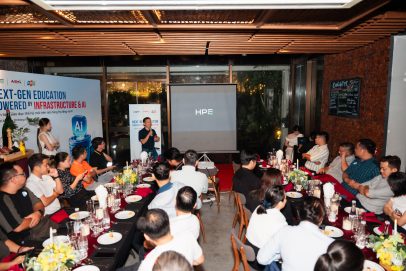
On September 10, FPT, in collaboration with HPE and ADG, hosted the seminar “Next-Gen Education Powered by Infrastructure & AI”, dedicated to the education sector. The event focused on sharing solutions for building AI-ready infrastructure and practical approaches to applying AI to real-world challenges, with the aim of enhancing teaching quality, management efficiency, and operational capabilities across educational institutions.
In recent years, Artificial Intelligence (AI) has become increasingly prominent in Vietnam’s education sector. According to the OECD’s PISA 2025 report, 95.9% of Vietnamese students reported having used AI chatbots for learning purposes, the highest rate among the 83 countries and economies surveyed. On the teaching side, 64% of Vietnamese teachers reported using AI for teaching and supporting students, with lesson planning and learning activity design among the most common applications. As AI has become an increasingly familiar tool for both learners and educators, the question is no longer simply whether to use AI, but how educational institutions can implement the technology systematically, securely, and at scale.
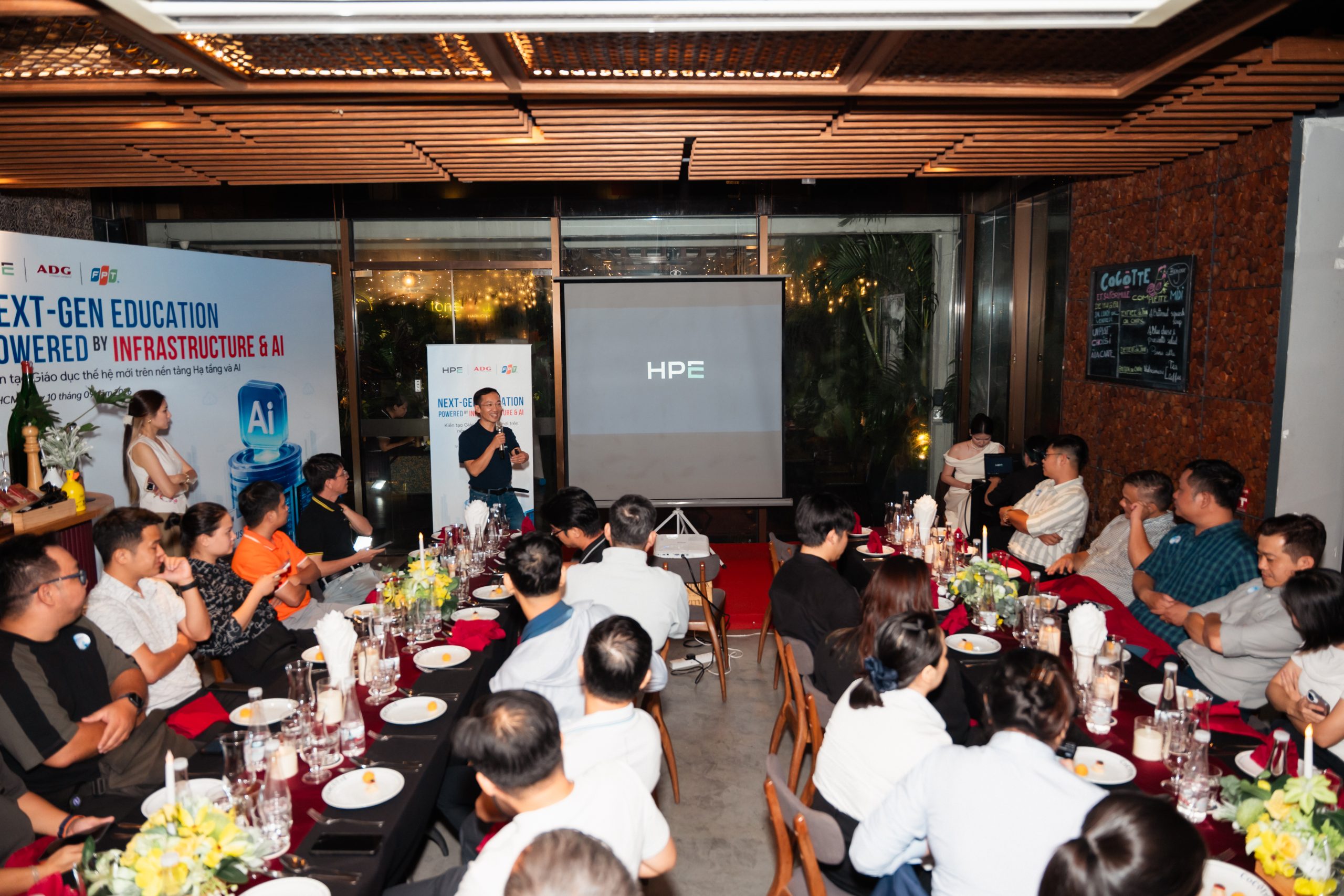
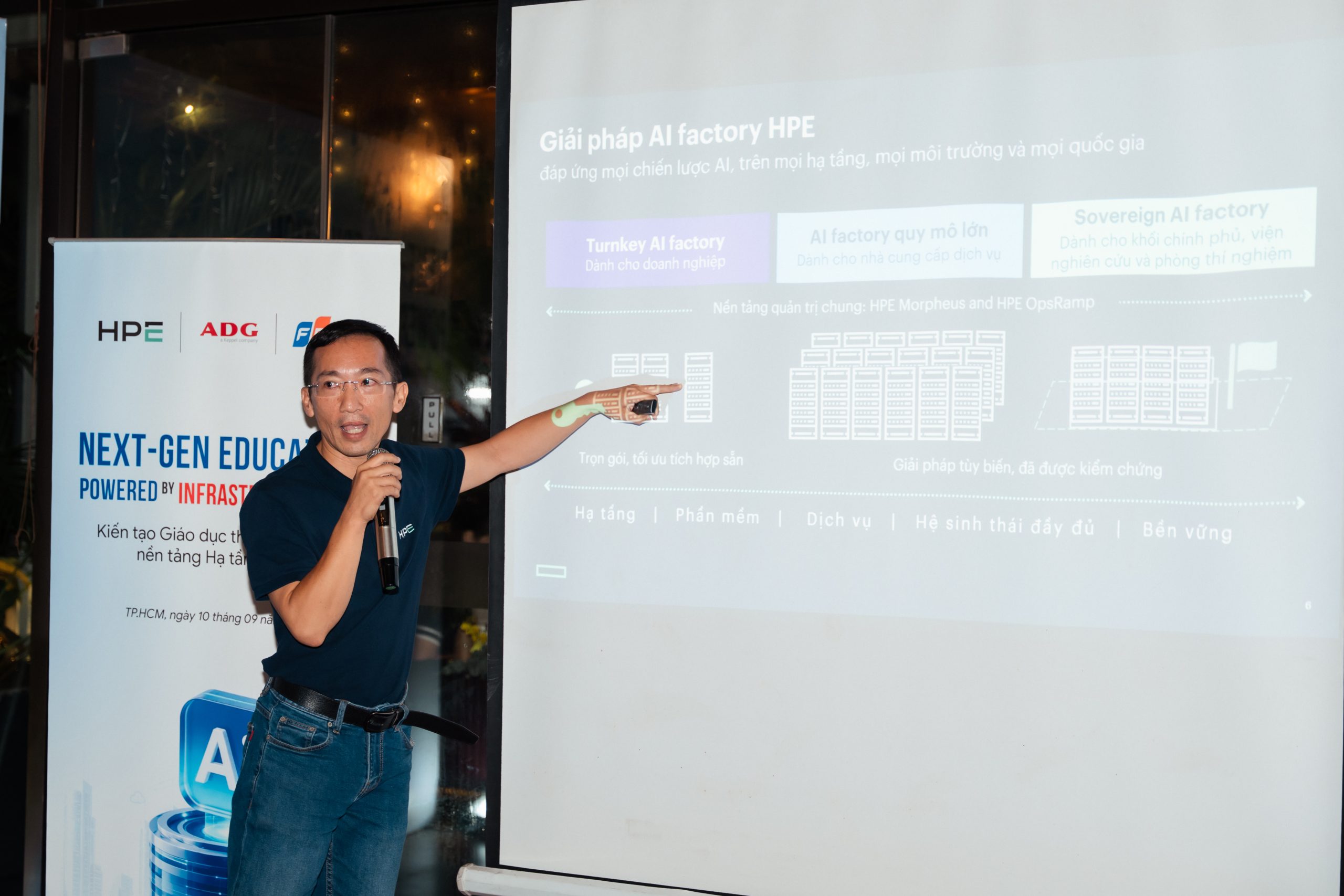
Speaking at the seminar, Nguyen Van Phuong, HPE Solutions Consultant, noted that AI deployment should not be viewed solely from the perspective of AI technology itself, but rather as part of a broader architecture and infrastructure ecosystem that encompasses data, systems, and the people responsible for operating them. “AI is being increasingly adopted across technology solutions in Vietnam and around the world. However, effective AI deployment requires preparation across multiple areas. First is the ability to connect and leverage data, as data is one of the key foundations for AI to operate. Organizations also need to clearly define their use cases and build systems tailored to specific requirements, while preparing teams with the capabilities to operate and leverage these systems,” said Mr. Phuong. With this approach, Mr. Phuong introduced HPE AI Factory, an integrated model combining infrastructure, software, and services to help educational institutions build AI environments using real-world data. The model is designed to shorten deployment timelines and accelerate the transition from AI applications to actual operations, creating practical value while providing a foundation for scaling AI workloads as needs evolve.
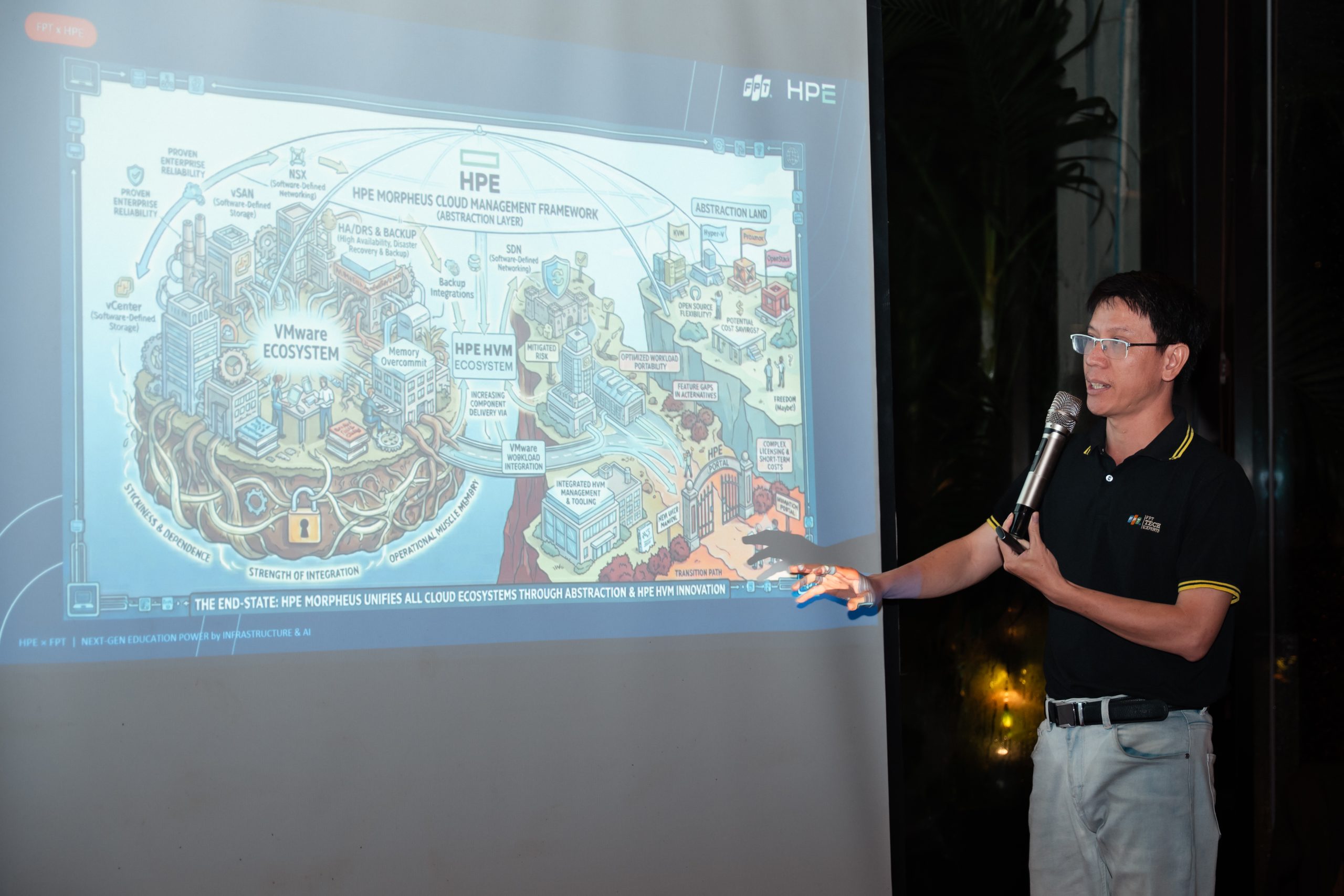
Alongside the need for AI-ready infrastructure, investment and operational costs are also major concerns for educational institutions. According to Le Van Hoang Trung, Deputy Director of the FPT IS Infrastructure Services Center, FPT Corporation, schools today commonly rely on virtualization platforms to operate their server systems. However, rising licensing costs are placing additional pressure on institutions and creating a need for more optimized approaches that can leverage existing infrastructure. To help educational institutions better understand this approach, Mr. Trung introduced HPE Morpheus, a virtualization environment management solution that enables organizations to make use of their existing server infrastructure instead of investing in an entirely new system. This approach can help institutions reduce licensing costs by more than 90% compared with conventional deployment models currently used by schools, while the transition can be carried out without disrupting ongoing operations or teaching activities.
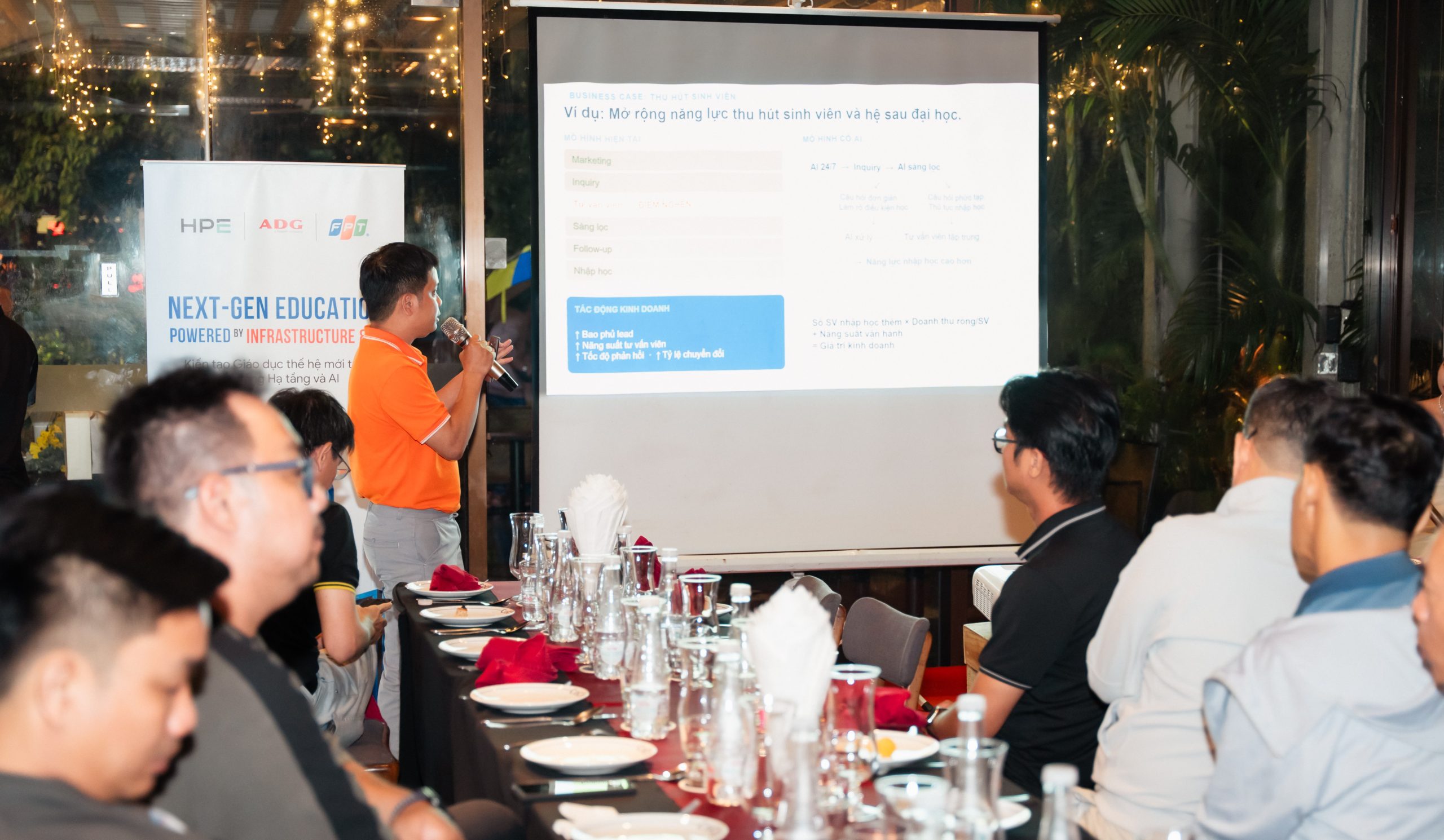
From an application perspective, Nguyen Tan Tai, AI Solutions Consultant at FPT Smart Cloud, FPT Corporation, agreed that AI is gradually becoming a familiar tool and is increasingly present in teaching and learning activities. However, moving AI from individual use cases to organization-wide operations remains a challenge for many educational institutions. Addressing this challenge, Mr. Tai introduced the Multi-Agent model, an approach that enables AI to participate in a wide range of activities across educational institutions. Under this model, multiple specialized AI Agents can work together to support different operational functions, from learning assistance and 24/7 student information support to lesson planning, grading and assessment, admissions consulting, and administrative operations. The FPT expert also provided a practical example of how Multi-Agent technology can expand teachers’ support capacity. While a teacher may previously have been responsible for approximately 50 students, AI-assisted support for repetitive tasks could enable that capacity to increase to around 70–100 students in suitable models. This can help educational institutions expand their training capacity, optimize operational resources, and give educators more time to focus on activities requiring professional expertise and direct interaction with learners.
Through practical insights from technology experts, the seminar “Next-Gen Education Powered by Infrastructure & AI” provided actionable perspectives closely aligned with the current challenges facing the education sector. The event also opened up new perspectives on building intelligent infrastructure and developing AI adoption strategies suited to real-world operational needs, with the goal of enhancing teaching quality and management efficiency across educational institutions.