FPT supports the Supreme People’s Court in training and launching the expanded pilot of the KPI Platform for evaluating officials, civil servants, public employees and employees of the People’s Courts
Hanoi, September 12, 2026 – The Supreme People’s Court (SPC) held a training conference and launched the expanded pilot of the KPI Platform for Evaluating Officials, Civil Servants, Public Employees and Employees of the People’s Courts (the Platform) nationwide.
The program was carried out under Plan No. 486/KH-TANDTC on the “60-day-and-night campaign to build the system for evaluating officials, civil servants, public employees and employees of the People’s Courts (KPI),” in coordination with the Information Technology Department of the Supreme People’s Court and technology partner FPT Corporation.
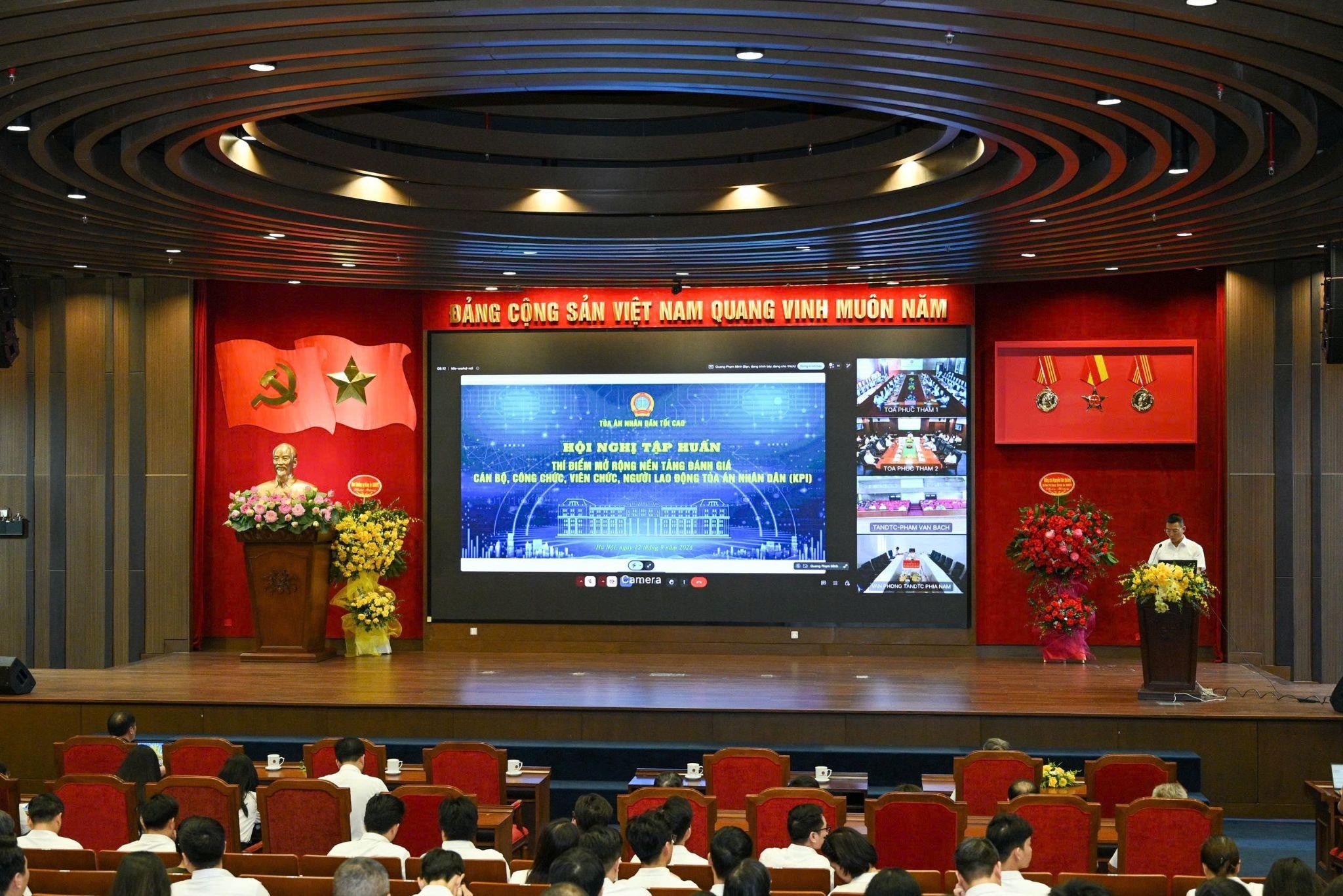
The training conference and expanded pilot launch of the KPI Platform for Evaluating Officials, Civil Servants, Public Employees and Employees of the People’s Courts took place on September 12.
The conference marked the next step following the first pilot conducted from August 24 to 28 at the Office of the Supreme People’s Court, the Department of Personnel and Organization, and the Information Technology Department. The expanded pilot phase enables participating units to directly experience and operate the Platform in practice, thereby validating its operational capabilities while continuing to comprehensively refine business processes, evaluation criteria, data, and technical solutions. Under the direction of Mr. Nguyen Van Quang, Secretary of the Party Central Committee, Chief Justice of the Supreme People’s Court, the Platform is scheduled to undergo large-scale pilot deployment at units under the Supreme People’s Court by September 30, 2026.
Speaking at the opening of the conference, Mr. Chu Duc Anh – Director of the Organization Department, Chief Justice of the Supreme People’s Court, said that the KPI Platform was developed based on the Government’s Decree No. 335/2025/ND-CP on the assessment and classification of the quality of state administrative agencies and civil servants, together with the direction of Chief Justice Nguyen Van Quang of the Supreme People’s Court. This provides a basis for the Supreme People’s Court to innovate its evaluation practices toward greater openness and transparency based on data, while strengthening the application of technology and digital transformation in personnel management, monitoring, and evaluation.
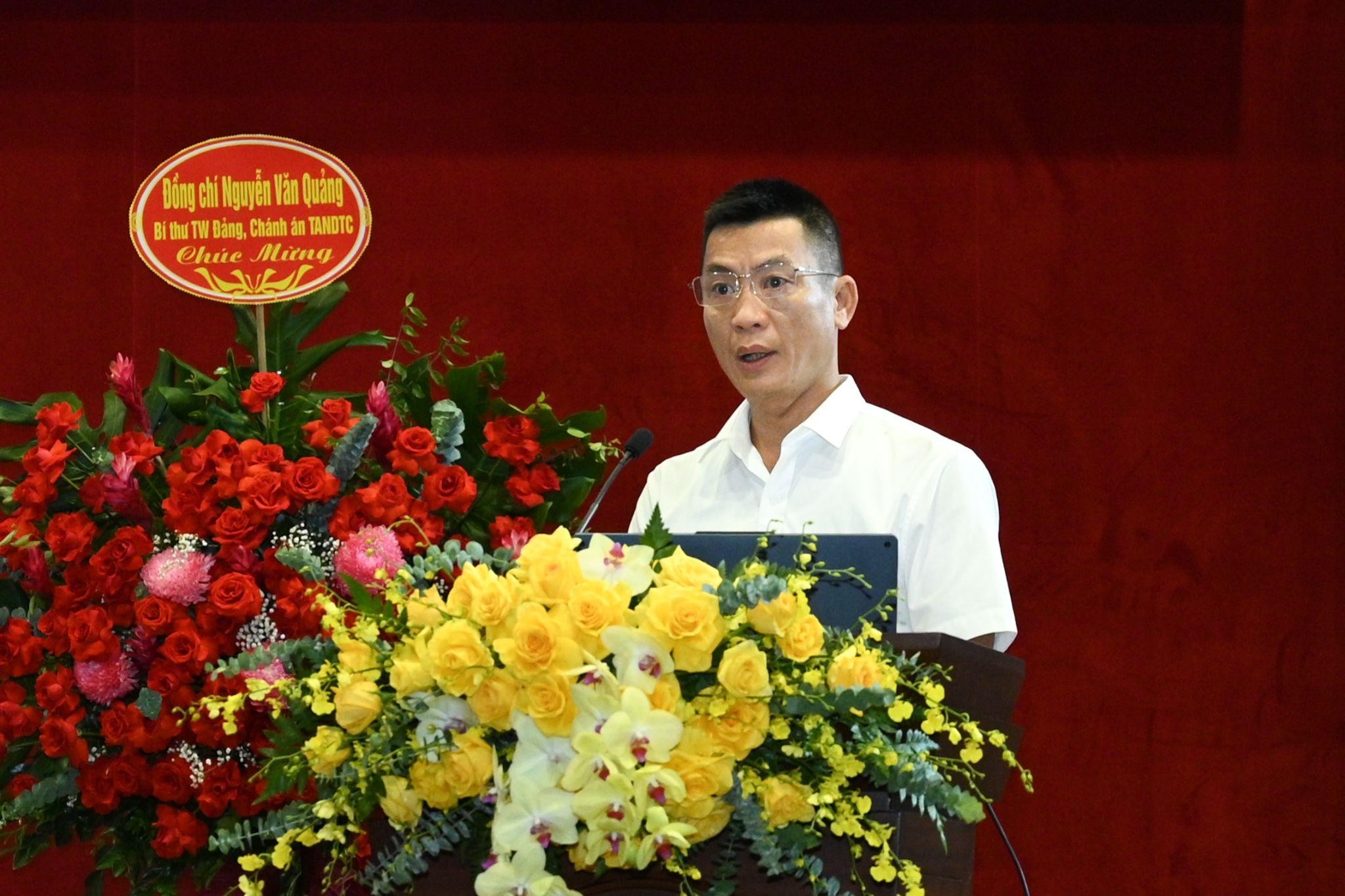
Mr. Chu Duc Anh – Director of the Organization Department, Chief Justice of the Supreme People’s Court, delivers the opening remarks, sharing the objectives and value of developing and deploying the Platform.
The KPI Platform for Evaluating Officials, Civil Servants, Public Employees and Employees of the People’s Courts is an end-to-end digital platform for work management and evaluation, integrating three subsystems: Document Management, Task Assignment and Tracking, and Personnel Evaluation. The Platform creates an end-to-end flow from document processing and task assignment to task execution, result recording, and evaluation. It combines technology with evaluation processes under Decree No. 335/2025/ND-CP on the assessment and classification of the quality of civil servants, enabling data connectivity and the use of standardized work data as a basis for evaluation, while integrating AI at every touchpoint to support users throughout their workflows.
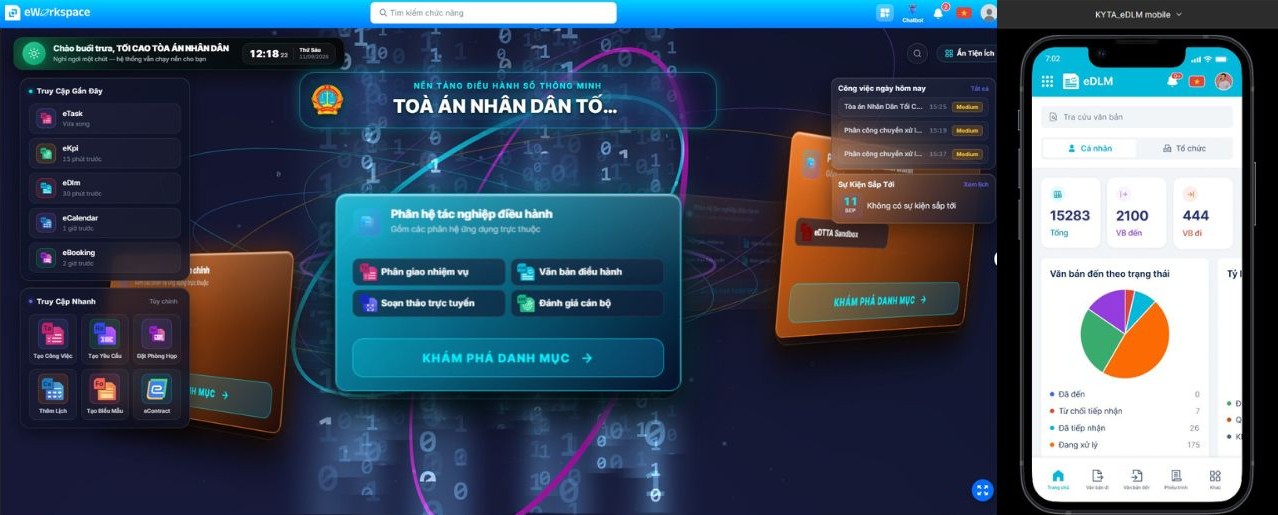
The KPI Platform for Evaluating Officials, Civil Servants, Public Employees and Employees of the People’s Courts on desktop and mobile devices.
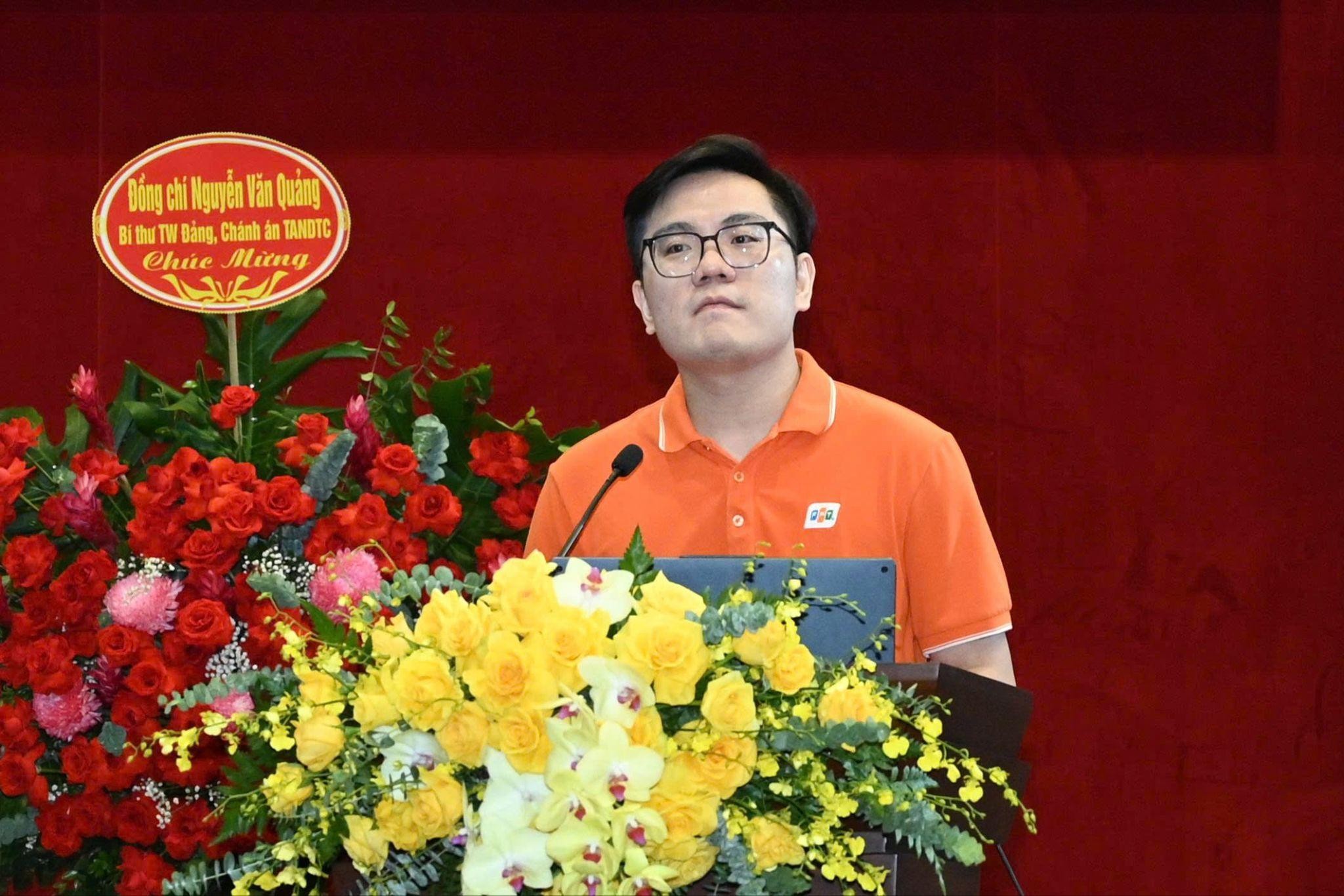
FPT representative Le Trung Hieu shares the Platform’s deployment direction, emphasizing that end-to-end data will be connected throughout the process.
According to Mr. Le Trung Hieu, Director of the Enterprise Digital Solutions Center, FPT IS, FPT Corporation, the Platform has been designed and deployed by the Supreme People’s Court and FPT based on the approach of “one platform – one data flow,” creating an end-to-end connection from document processing and task generation to task execution and completion, with execution data flowing into the evaluation system. Data is inherited across subsystems, minimizing repeated data entry and manual updates across multiple systems.
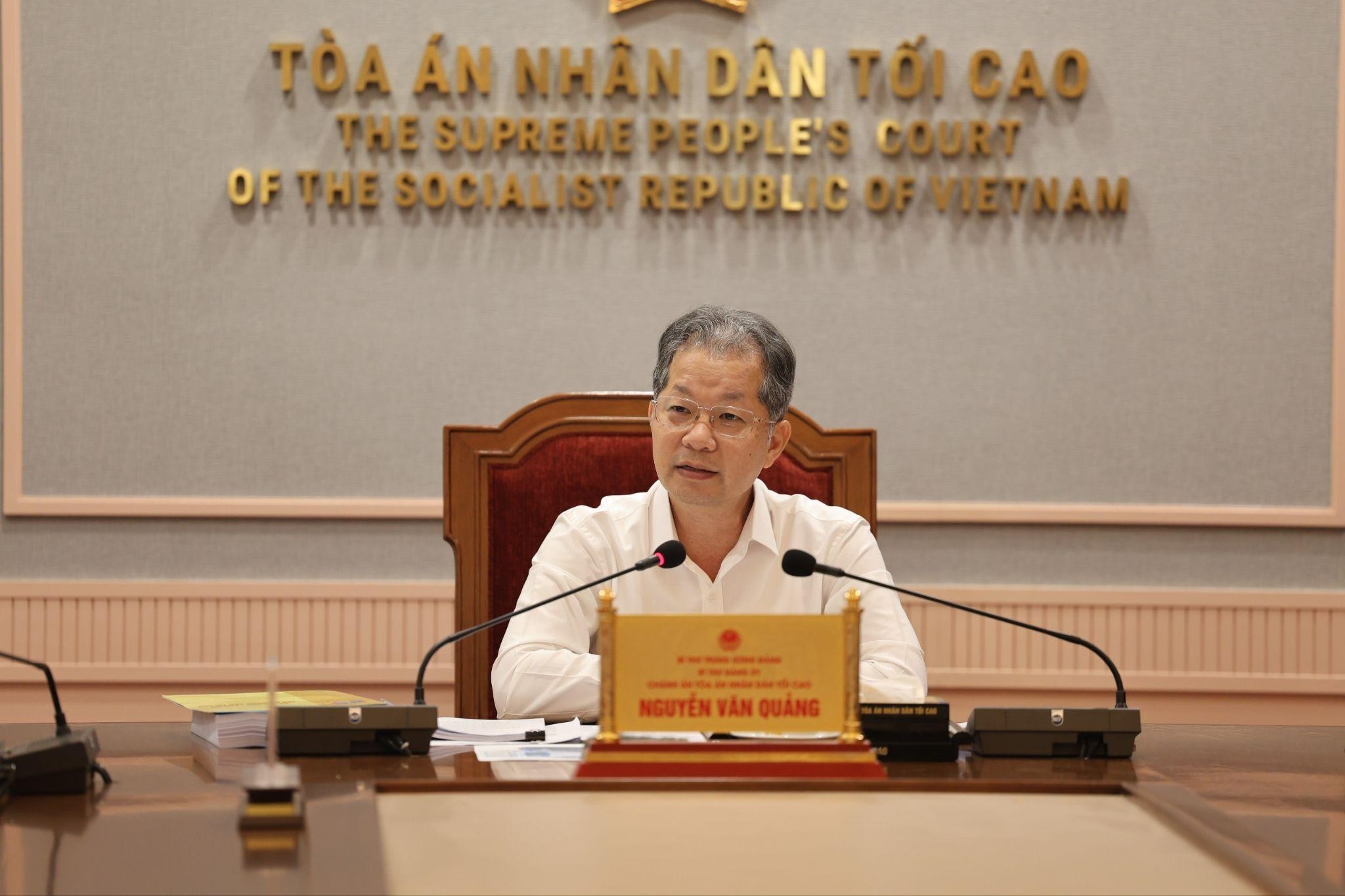
Before the expanded pilot phase, the Platform had been piloted at three units under the Supreme People’s Court.
The training and expanded pilot of the Platform are being conducted at 17 units under the Supreme People’s Court, the People’s Court of Hanoi, and Regional People’s Court No. 2 of Hanoi, while also connecting online to the appellate courts of the Supreme People’s Court in Da Nang and Ho Chi Minh City.
Previously, the KPI Platform for Evaluating Officials, Civil Servants, Public Employees and Employees of the People’s Courts was piloted at three units, namely the Information Technology Department, the Office of the Supreme People’s Court, and the Department of Personnel and Organization, starting on August 24, 2026. Following this phase, the system continued to receive feedback and undergo upgrades before centralized training was conducted.
During the first pilot, 68 participants registered and 121 rounds of feedback were recorded. The basic functional workflows were initially validated, while areas requiring further refinement were identified, including business processes, evaluation criteria, access permissions, data, user interface, digital signatures, processing workflows, and integration.
From September 14 to 16, the program will continue online training sessions organized by subsystem and user group. Following the training, from September 17 to 30, 2026, FPT will provide on-site support at participating units, guiding them in operating the Platform using real-world data and scenarios, while recording and addressing difficulties, issues, and adjustment requirements arising during actual use.
The expanded pilot marks an important step for the Supreme People’s Court to validate the Platform under real-world operating conditions and further refine its processes, data, and technical solutions ahead of subsequent deployment phases. With an approach to management based on tasks, outputs, and data, the Platform aims to support personnel evaluation in a more transparent manner, reduce reliance on manual declarations, and more closely reflect actual task performance.