FPT Leader Proposes Urban Digital Twin Model for Smart City Construction Management
On May 15 in Hanoi, the National Innovation Center (NIC) under the Ministry of Finance, in collaboration with Arup Ventures (United Kingdom), organized the forum “Innovation in Smart City and Smart Factory Development in Vietnam.” At the event, Mr. Tran Tuan Anh – Vice President and Chief Product Officer of FPT IS, FPT Corporation – shared insights into the implementation of the Urban Digital Twin model to accelerate smart city development.
The forum took place as Vietnam enters a new stage of development requiring rapid and sustainable growth, with science and technology, innovation, and digital transformation serving as key driving forces. In his opening remarks, Mr. Vo Xuan Hoai, Deputy Director of the National Innovation Center, noted that rapid urbanization alongside the strong advancement of digital technologies, artificial intelligence (AI), the Internet of Things (IoT), big data, and automation is fundamentally transforming how cities and industrial production systems operate worldwide.
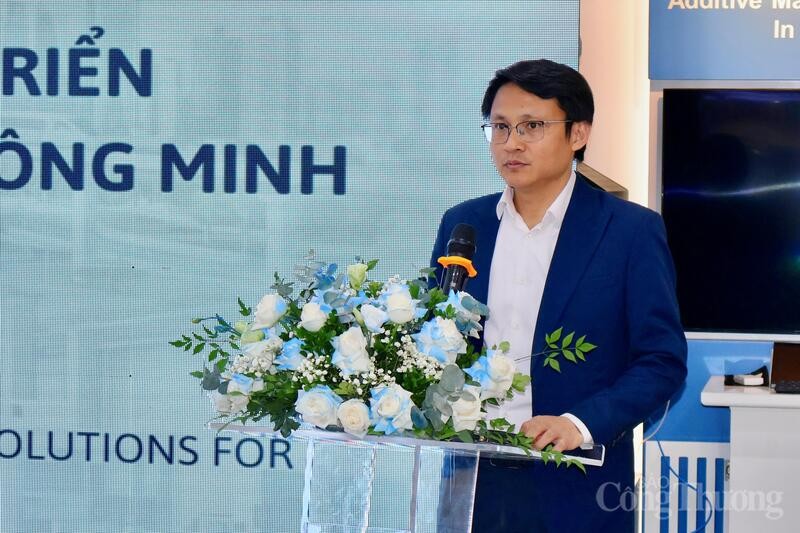
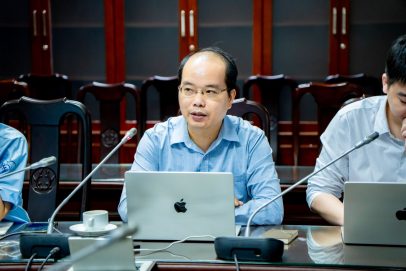
Mr. Vo Xuan Hoai, Deputy Director of the National Innovation Center. Photo: Phuong Ha
According to Mr. Vo Xuan Hoai, in this context, the development of smart cities and smart factories is no longer merely a trend, but has become a critical driver for sustainable economic growth, higher labor productivity, and improved quality of life. In Vietnam, the development of smart urban areas and smart factories is being strongly promoted. “The Ministry of Industry and Trade is advancing programs related to smart factories, while the Ministry of Construction is implementing smart urban and smart city initiatives. This demonstrates Vietnam’s determination to transform its growth model toward one driven by technology and innovation,” Mr. Vo Xuan Hoai emphasized.
The forum featured in-depth presentations from leading domestic and international technology corporations on strategic technology solutions supporting the dual transformation of urban digitalization and industrial smartification. At the event, Mr. Tran Tuan Anh – Vice President and Chief Product Officer of FPT IS, FPT Corporation – delivered a presentation titled “Urban Digital Twin in Construction Management,” offering perspectives on the role of technology in addressing major challenges of modern urbanization.
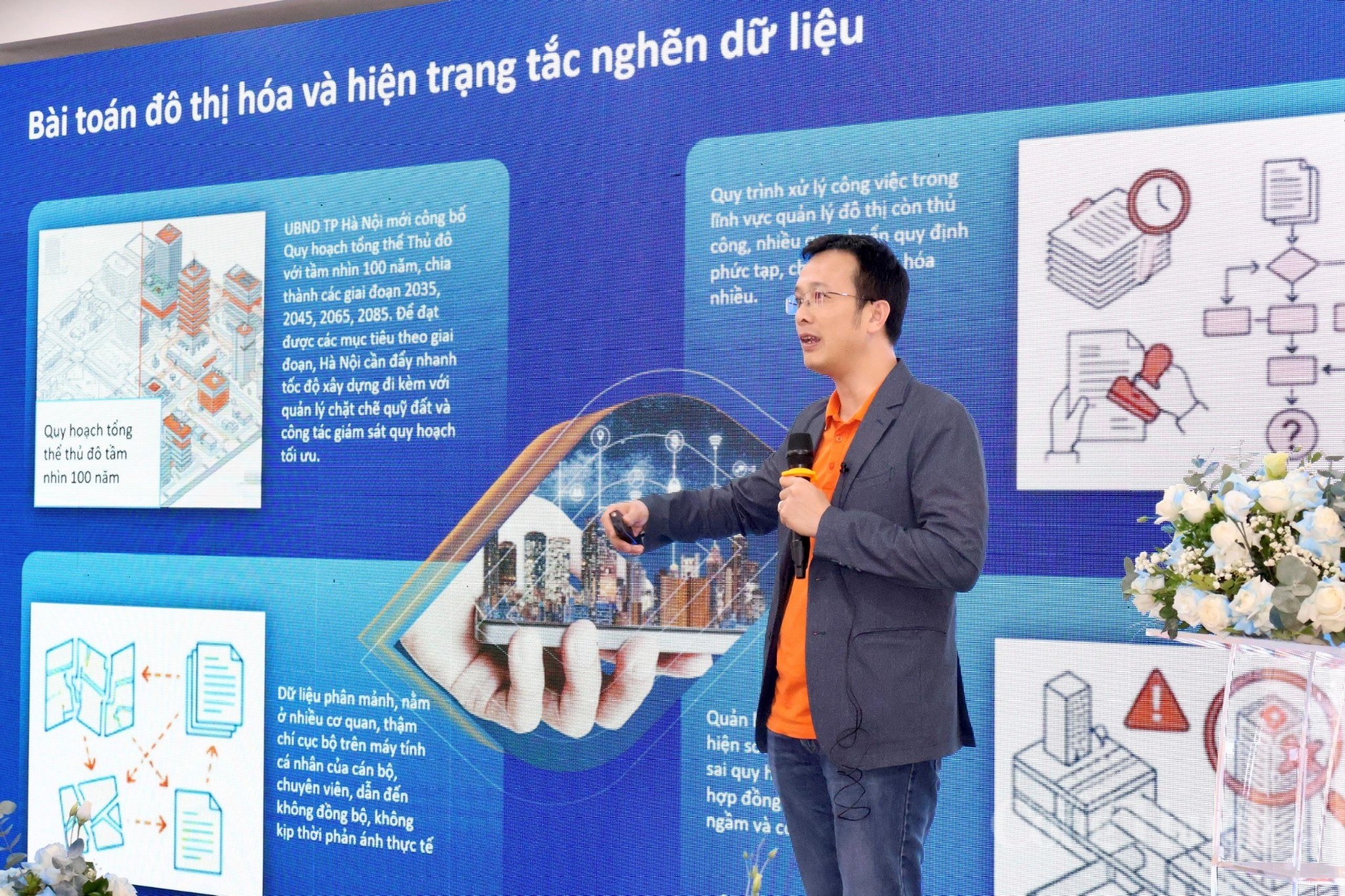
Mr. Tran Tuan Anh, Vice President and Chief Product Officer of FPT IS, FPT, speaking at the forum event. Photo: Phuong Ha
According to Mr. Tuan Anh, with Hanoi’s 100-year capital planning vision, the need to build an intelligent urban governance system powered by digital data and real-time analytics has become more urgent than ever.
However, current realities show that planning data remains fragmented across multiple agencies, while operational processes are complex, lack interoperability, and have not been fully automated. As a result, planning supervision, violation detection, and technical infrastructure coordination have yet to achieve the expected level of efficiency.
Based on these practical challenges, FPT proposed the Urban Digital Twin model as a strategic platform for smart urban development. More than just a 3D simulation model, the Urban Digital Twin enables comprehensive digitization of urban conditions, integrates real-time data, and applies AI to support forecasting, scenario simulation, and decision-making. “This will serve as a foundation enabling cities to shift from reactive management to proactive, data-driven governance,” Mr. Tuan Anh emphasized.
According to the FPT executive, the model is built on four foundational layers: 2D/3D spatial data infrastructure; dynamic data layers from IoT, sensors, and cameras; AI/Machine Learning analytics layers; and smart urban service layers supporting transportation, utilities, environmental management, emergency response, and public services. Among these, “accurate – sufficient – clean – live” data, interconnected with national databases, is considered the core element for effectively operating the entire ecosystem.
Mr. Tuan Anh also shared that FPT is currently participating in smart city projects in Japan and Singapore. In these projects, GIS systems integrate 2D/3D mapping data, satellite imagery, UAV data, and technical infrastructure information to create a real-time panoramic urban view. At the same time, BIM data from individual buildings is connected to form detailed digital twins covering both above-ground structures and underground infrastructure, including structural, material, technical system, and fire protection information. On this platform, AI acts as a “digital assistant,” continuously analyzing and cross-referencing data from macro to micro levels to support simulation, forecasting, and urban operations optimization.
In particular, construction management is considered one of the most representative applications of the Urban Digital Twin. While traditional processes rely heavily on 2D documents, manual reviews, and weeks-long processing times, the new digital platform can automate the entire workflow within minutes. Investors can directly upload BIM models to the system, where AI automatically extracts data, conducts compliance checks against legal regulations, and generates transparent visual assessment reports. The solution significantly shortens application processing times, reduces dependence on manual operations, and enhances supervision efficiency while minimizing subjective errors in construction management.
Concluding his presentation, Mr. Tran Tuan Anh stressed that smart city development is not solely a technology story, but also requires close collaboration between the government and enterprises through long-term partnership models. With extensive experience in implementing large-scale technology systems for government agencies, ministries, and local authorities, as well as its strategic focus on mastering advanced technologies such as AI, Quantum AI, Cybersecurity, and UA, FPT is committed to continuing its partnership with Vietnam in realizing Resolution No. 57-NQ/TW, advancing smart urban development, and building a modern digital governance foundation for the future.