FPT proposes national simulation-based training platform to enhance digital anti-scam reflexes
The series of activities marking Vietnam Cybersecurity Day 2026, themed “For a Humane Cyberspace for Everyone,” took place from August 14–16 in Hanoi, bringing together regulators, technology enterprises, experts, and the community to discuss solutions for protecting users in cyberspace. Participating in the program, FPT experts delivered a presentation, joined a panel discussion, and proposed a national simulation-based training platform to enhance digital anti-scam reflexes, drawing the attention of delegates to a proactive approach to strengthening users’ self-protection capabilities.
The workshop was one of the opening activities in the series marking Vietnam Cybersecurity Day 2026, themed “For a Humane Cyberspace for Everyone.” Taking place from August 14–16 in Hanoi, the series featured an exhibition, technology experiences, professional workshops, an art program, and community activities, with the aim of spreading knowledge, skills, and solutions to build a safe, healthy, trusted, and humane cyberspace.
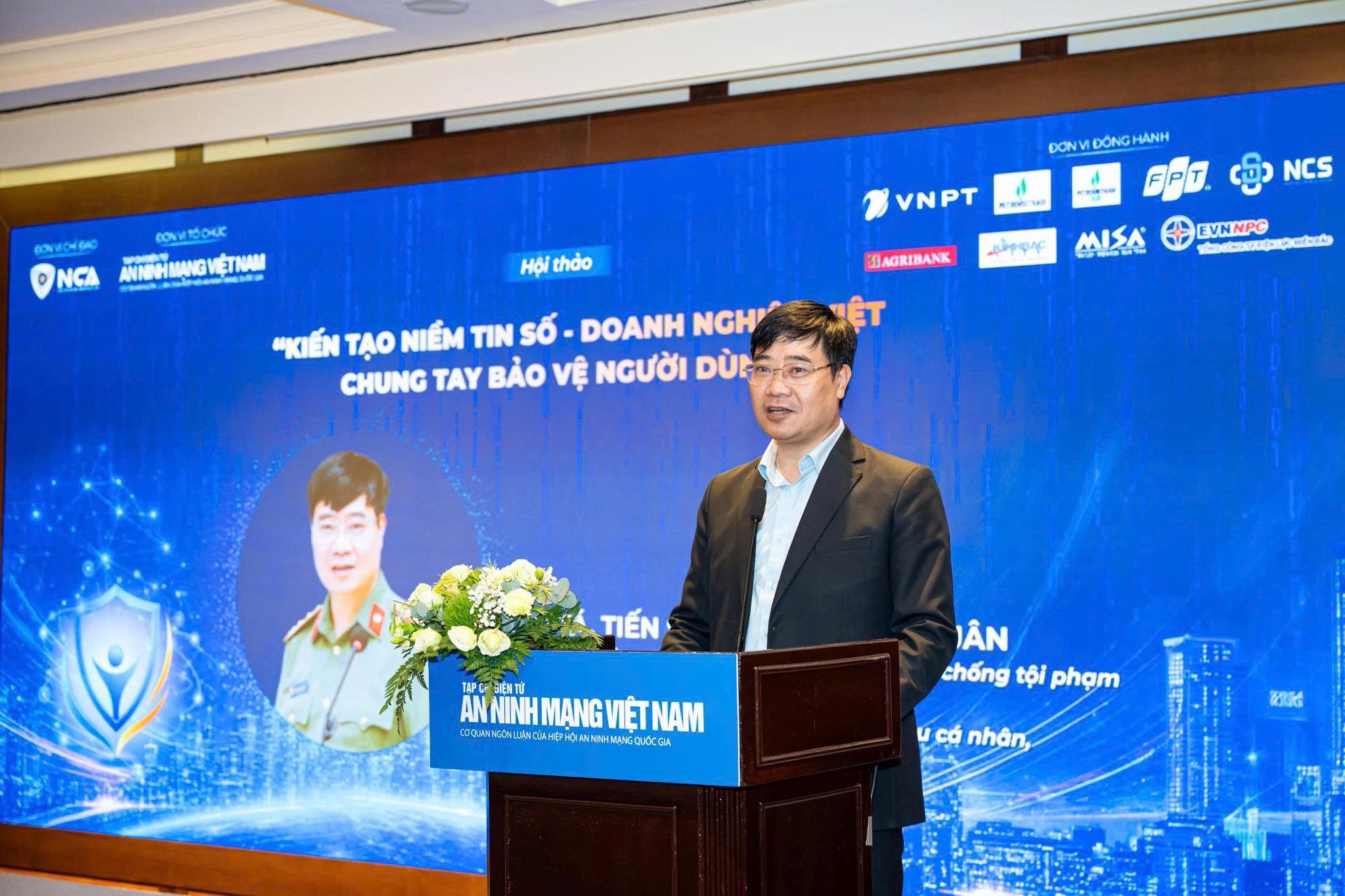
Colonel Nguyen Hong Quan, Deputy Director of the Cyber Security and High-Tech Crime Prevention Department (A05, Ministry of Public Security ), speaks at the workshop
Delivering the keynote orientation at the workshop, Colonel Nguyen Hong Quan, Deputy Director of the Cyber Security and High-Tech Crime Prevention Department, emphasized that while technology brings many conveniences, cybersecurity risks are always present, and anyone, including professionals working in network security and information technology, can become a victim if they let their guard down even for a moment. According to him, building a safe cyberspace where people are protected and interact with one another with kindness and respect is a shared responsibility of state management agencies and service providers.
Sharing the view that people must remain at the center of efforts to build a safe cyberspace, leading technology enterprises brought a range of valuable presentations to the workshop, focusing on practical issues in protecting users in the digital environment, from protecting children, families, and businesses; ensuring technological and digital infrastructure autonomy; to identifying forms of cyberattacks and leveraging community data in preventing and combating online scams. The speakers jointly emphasized the need to strengthen users’ ability to identify, receive warnings about, and respond to risks, while enhancing coordination among stakeholders.
For FPT, the company introduced an approach centered on training people’s ability to identify and respond to real-life threats, rather than simply equipping them with knowledge about how to recognize scams. Dr. Nguyen Thanh Binh, Global Cybersecurity Consultant at FPT IS, FPT Corporation, delivered a presentation titled “Understand to Empathize, Learn to Think Clearly – FPT’s National Simulation-Based Training Platform to Enhance Digital Anti-Scam Reflexes,” focusing on the gap between users’ awareness and their actual reflexes when confronted with increasingly sophisticated forms of high-tech fraud.
According to FPT, high-tech scams today no longer exploit only technical vulnerabilities but increasingly target psychological factors, taking advantage of innate human weaknesses. “Spear Phishing” techniques can leverage personal data to create personalized scenarios that prey on an individual’s fear, compassion, or curiosity. Meanwhile, training purely through information from the press, media, leaflets, and other channels, while highly useful, is not sufficient to develop the necessary reflexes when users actually encounter a scam situation – as evidenced by the number of scams and their consequences in recent years.
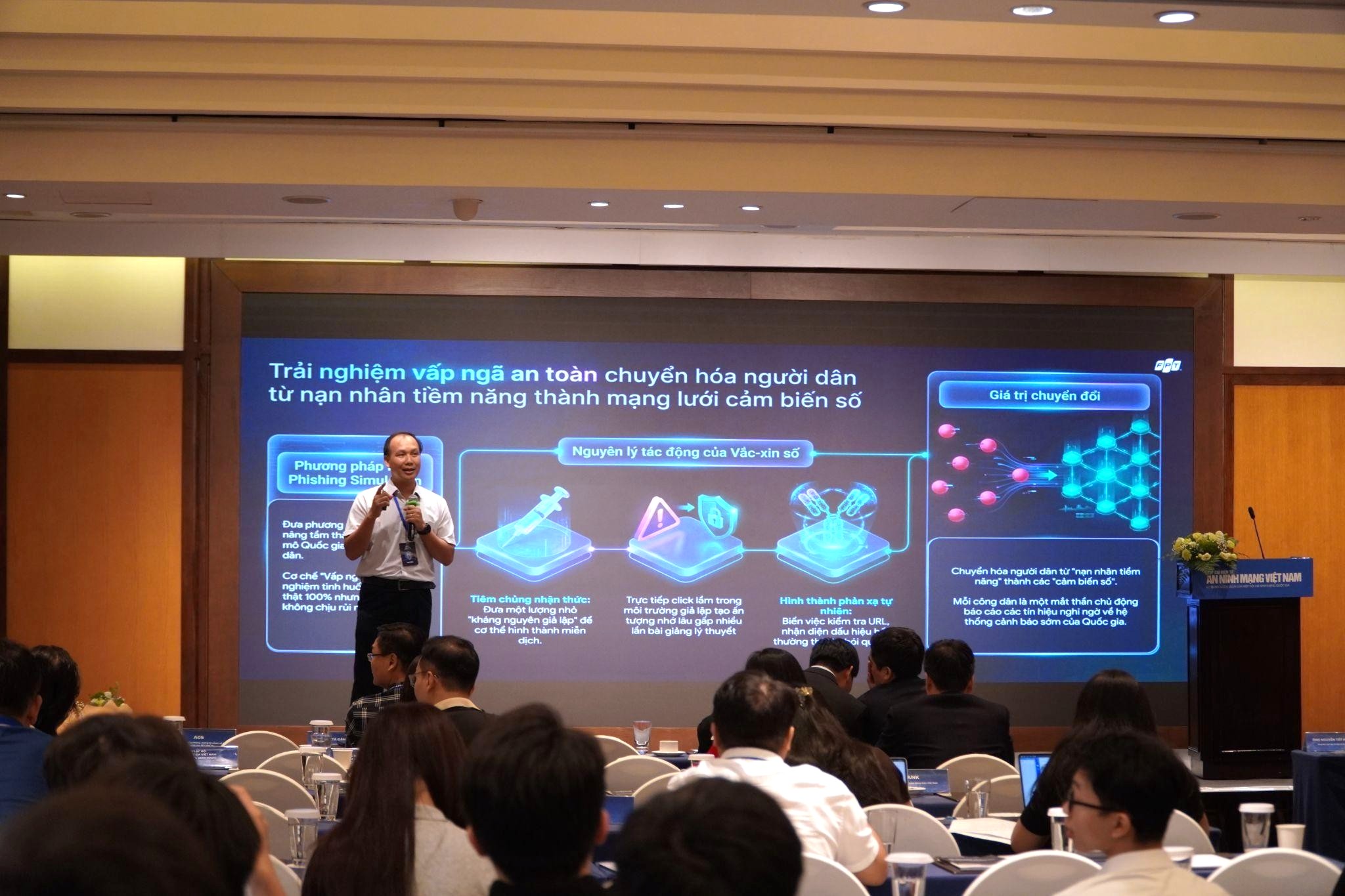
Dr. Nguyen Thanh Binh – FPT presents a proposal for deploying a national simulation-based training platform to help people enhance their digital anti-scam reflexes
FPT therefore proposed shifting from an approach of “providing information” to “training real-life reflexes” through a Phishing Simulation platform. Instead of simply reading and memorizing warning signs, users directly interact with simulated scam scenarios in a safe environment, thereby developing reflexes such as checking URLs, identifying unusual signs, and reporting suspicious activity when risks are detected.
FPT describes this model as a “digital vaccine,” in which exposure to a small amount of “simulated antigen” helps users develop “behavioral immunity.” Each time a user receives a simulated phishing email or scam message and falls for it, they suffer no actual loss but instead receive direct training and guidance on the warning signs that manipulated them, helping reinforce the lesson and instructing them on how to report fraudulent activity. The goal is not only to help each individual proactively protect themselves, but also to turn every citizen into a “digital sensor” rather than a potential victim, contributing to an early-warning network by reporting suspicious signals to the system.
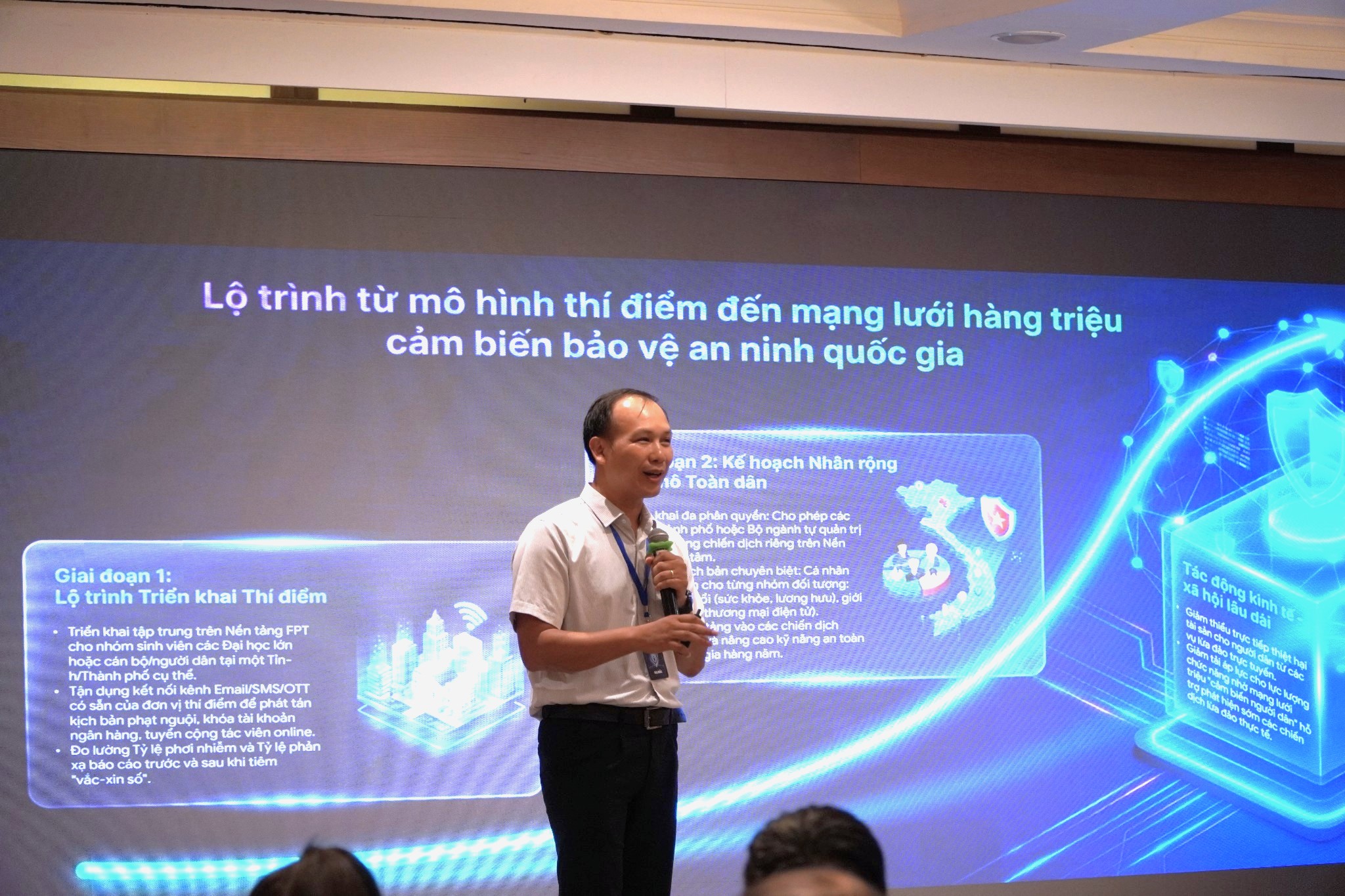
FPT’s Global Cybersecurity Consultant shares details of the model and roadmap for deploying a national cybersecurity simulation-based training platform for the public
To deploy the model nationwide, FPT proposed a three-layer coordination model involving regulatory agencies, telecommunications operators/over-the-top (OTT) messaging service providers, and technology enterprises such as FPT, which already provides simulation-based training services at the enterprise level. Simulated scenarios can be distributed to the appropriate target groups via SMS, email, or OTT platforms; users are then directed to an interactive environment to practice identifying risks, while data from their reporting responses is collected and used to enrich the early-warning system.
The proposed model would be implemented through a roadmap from pilot deployment to scaling. The initial phase could focus on a specific target group or locality, such as students at a university or residents of a ward, using realistic scenarios such as fake notifications about traffic fines or bank account suspension. As the platform expands, it could be deployed under a Multi-tenant model, allowing ministries, sectors, and localities to proactively manage campaigns while flexibly personalizing scenarios for different user groups, such as older people or young people, according to the characteristics and capabilities of each locality or organization. FPT and its partners could provide the underlying technological and technical support.
In addition, FPT proposed applying AI to enhance the platform’s adaptability to emerging forms of fraud. Generative AI could automatically generate simulated scenarios in real time based on new types of scams reported by the public, creating a feedback loop between real-world data and training activities. AI could also be applied to support the detection of deepfakes, facial impersonation, and voice impersonation.
According to FPT, a national simulation-based training platform could help shift the approach from prevention through awareness to protection through reflexes, thereby strengthening users’ ability to protect themselves against continuously evolving scam tactics. FPT affirmed its readiness to contribute technological capabilities, computing infrastructure, management systems, and a repository of simulated scenarios to work alongside agencies and organizations in developing the model, while ensuring requirements for data security and privacy.

FPT representatives (center, in white) and delegates participate in the panel discussion “Solutions to Strengthen User Protection in Cyberspace”
In addition to the presentation, Dr. Nguyen Thanh Binh also participated in the panel discussion “Solutions to Strengthen User Protection in Cyberspace,” together with other delegates to discuss solutions, experience, and coordination mechanisms to improve the effectiveness of user protection against cybersecurity risks. In response to a question about strengthening people’s awareness and anti-scam capabilities in the digital environment, Dr. Binh proposed incorporating training in logical thinking and critical thinking into the national education program as part of soft-skills training. According to him, this would help prepare and strengthen these ways of thinking across all levels of education, thereby developing a generation of citizens capable of analyzing and independently identifying both familiar and emerging scam scenarios, enabling them to remain more alert and clear-headed in cyberspace.
Through its presentation and participation in the panel discussion, FPT demonstrated its focus on developing cybersecurity capabilities and solutions, particularly in protecting users against increasingly sophisticated forms of fraud. This is also one of FPT Corporation’s strategic technology directions, alongside Quantum AI, UAV, Data, and railway technology, with the goal of mastering core technologies and developing high-quality human resources to strengthen national technological sovereignty. Leveraging its technological capabilities and the Made by FPT solution ecosystem, FPT is ready to work alongside regulatory agencies, businesses, and social organizations to research and deploy solutions that enhance digital anti-scam capabilities, protect data and users, and strengthen the ability to detect, warn against, and respond to cybersecurity risks. Through these efforts, FPT aims to contribute to building a safe, trusted, and humane cyberspace for everyone.