FPT Helps Businesses Navigate the Roadmap for Implementing Electronic Labor Contracts in Compliance with Decree 337/2025/ND-CP
As human resources increasingly become a strategic asset for businesses in the AI era, managing, leveraging, and protecting workforce data is creating new requirements in legal compliance, technology, and governance. In particular, the official enforcement of Decree 337/2025/ND-CP has encouraged many pioneering enterprises to digitize labor contracts and standardize labor management processes in the digital environment.
At the Vietnam Labor Forum 2026, themed “Labor Data Management in the AI Era,” senior FPT experts participated in an in-depth discussion session on electronic labor contracts and introduced the new-generation FPT.eContract solution, attracting significant interest from business leaders, HR professionals, legal experts, and technology specialists.
Through analyses of legal requirements under Decree 337/2025/ND-CP and practical implementation experience, FPT provided a comprehensive perspective and suitable solutions to help businesses prepare for the growing trend of digitizing labor relations and workforce data management in the new era.
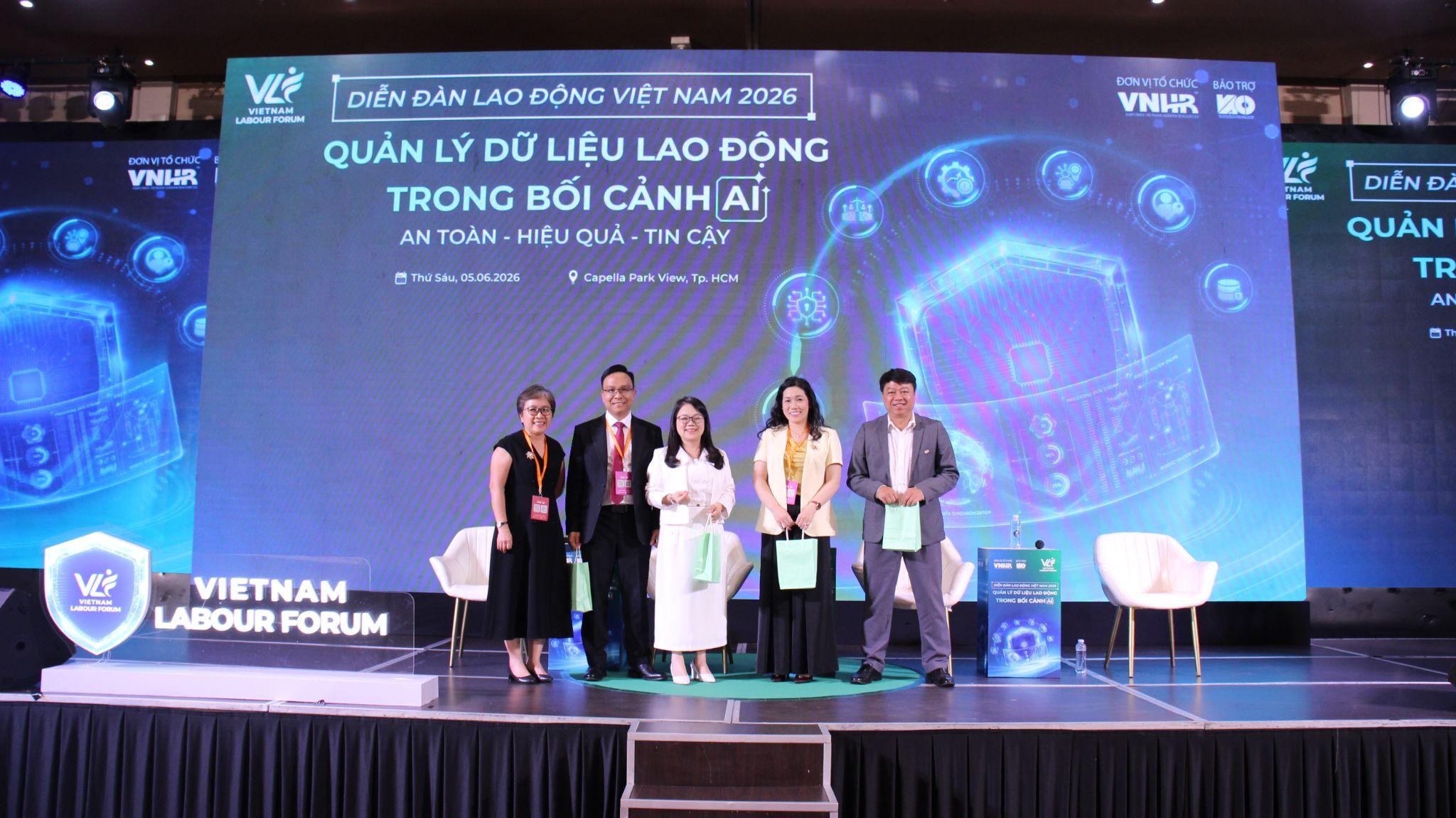
FPT Joins Vietnam Labor Forum 2026 to Discuss Electronic Labor Contracts and Introduce Its Electronic Contract Solution
The implementation of electronic labor contracts under the new regulations has attracted considerable attention from businesses, as it relates not only to legal compliance requirements but also directly impacts management efficiency and employee experience.
Vietnam Labor Forum 2026, organized by VNHR – the Vietnam Human Resources Community, which brings together more than 1,200 members from over 600 enterprises, was held in Ho Chi Minh City and gathered more than 500 business leaders and HR, legal, and technology experts from across the country. Under the theme “Labor Data Management in the AI Era,” the event focused on issues of particular concern to the business community, including updates on labor legislation, AI applications in HR management, labor data security, and the digital transformation of workforce management.
During the in-depth discussion session “Electronic Labor Contracts: Optimization or Risk?”, technology, legal, and HR leaders exchanged views on issues that businesses are concerned about when implementing electronic labor contracts, ranging from the legal validity of agreements concluded in digital environments to identity verification, data security, and electronic evidence management.
According to experts, Decree 337/2025/ND-CP has established a clearer legal framework for implementing electronic labor contracts. In addition to recognizing the legal validity of electronic contracts, the decree also introduces requirements regarding identification, authentication, storage, and protection of labor data. This is one of the reasons many businesses are seeking solutions that both meet compliance requirements and ensure operational efficiency and employee satisfaction.
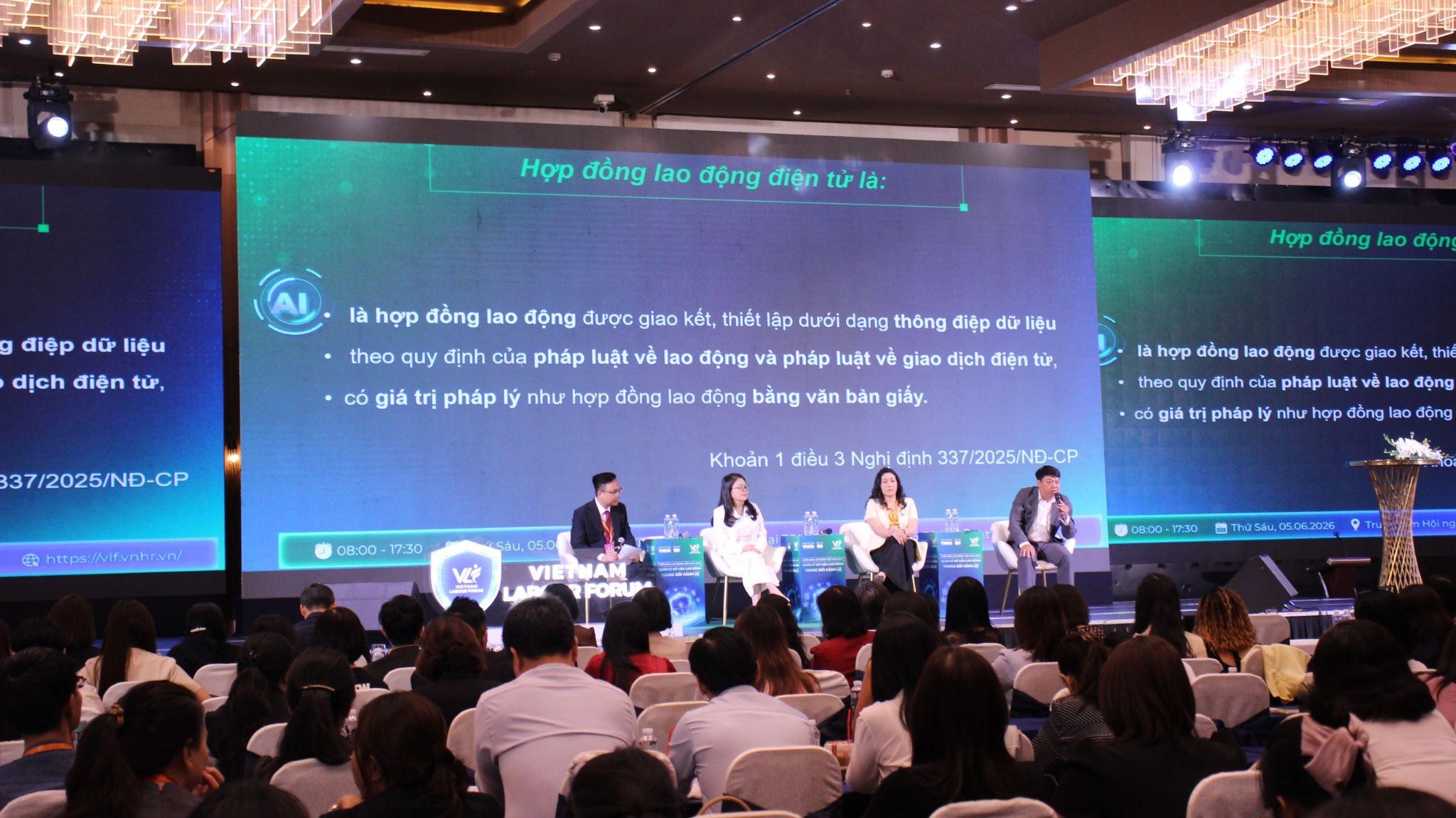
The discussion session focused on clarifying new regulations related to electronic labor contracts
Mr. Nguyen Ta Anh, Deputy Director of the Enterprise Digital Solutions Center, FPT IS, FPT Corporation, stated that electronic labor contracts are not only tools that help businesses comply with new legal requirements but also directly create the foundation for digital enterprise management. Digitizing the entire process—from contract creation and signing to storage and retrieval—enables businesses to improve operational efficiency, significantly reduce manual workloads, and enhance their ability to manage and leverage workforce data.
Drawing on implementation experience across enterprises in manufacturing, retail, logistics, services, and finance, FPT has observed that organizations with large workforces are increasingly interested in transitioning from paper-based records to digital labor management in order to optimize costs, improve employee experience, and increase transparency in operations.
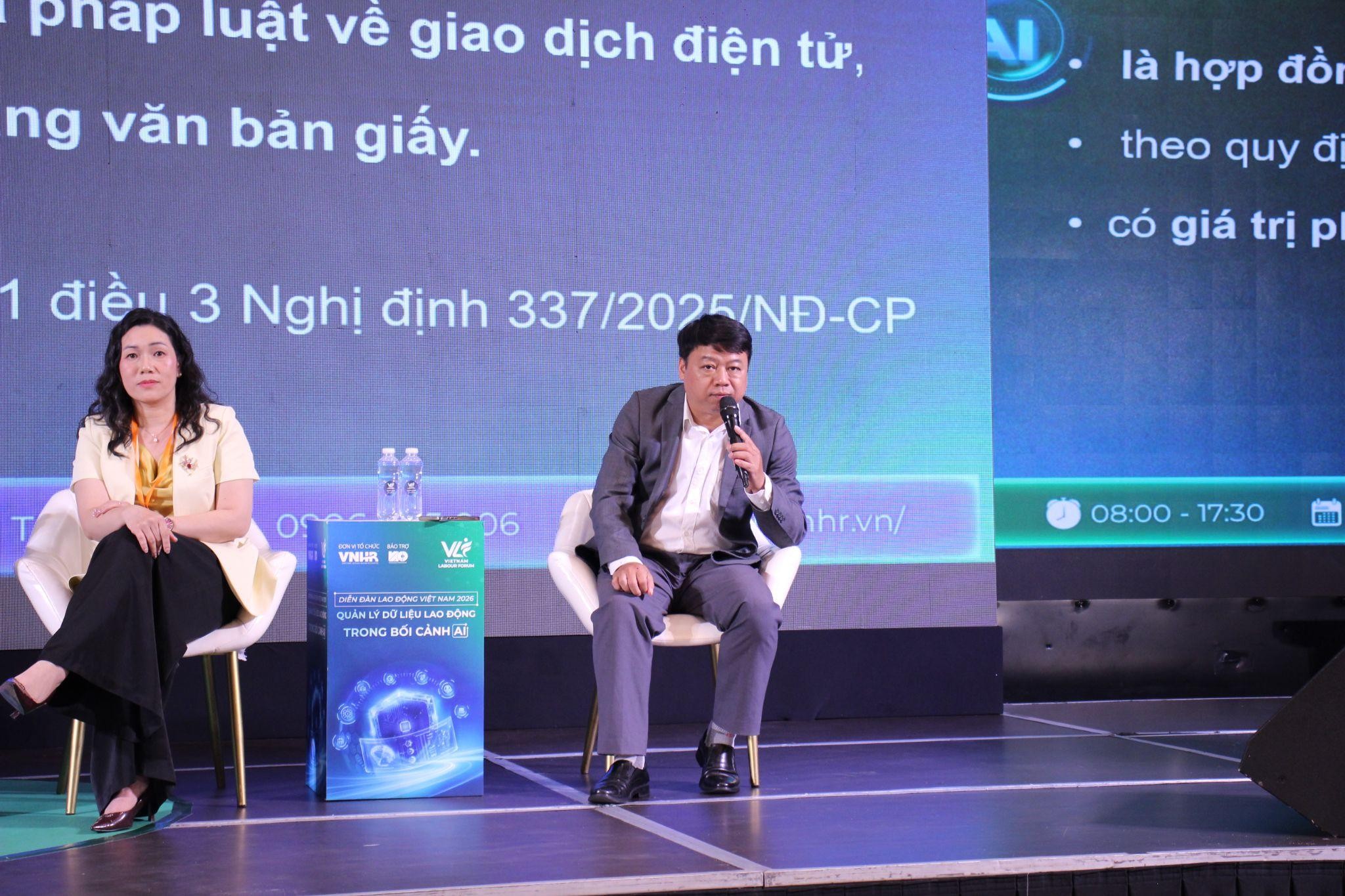
Mr. Nguyen Ta Anh Shares Practical Experience in Implementing Electronic Labor Contracts in Enterprises
Alongside the opportunities offered by electronic labor contracts, speakers also highlighted several concerns businesses face when implementing them under Decree 337/2025/ND-CP. According to lawyer Duong Tieng Thu, to ensure legal validity, electronic labor contracts must fully comply with requirements related to digital signatures, timestamps, and data message certification. Meanwhile, Ms. Pham Thi Bich Thuy, HR Director of VINASOY, noted that the greatest challenges currently lie in understanding the new regulations, investing in technology, implementation costs, and changing employees’ usage habits.
The experts agreed that businesses need a transformation roadmap aligned with their operational characteristics and workforce structure, while selecting solutions that meet compliance requirements, are easy to deploy, and can integrate with existing systems.
Addressing concerns about technology accessibility among blue-collar workers in manufacturing, retail, and service enterprises, Mr. Nguyen Ta Anh also emphasized that today’s electronic signing solutions have been significantly simplified in terms of usability. Based on practical implementation experience across numerous retail chains and manufacturing plants, workers of varying skill levels can quickly become familiar with and proficient in electronic signing processes after a short period of guidance and hands-on experience.
In addition, at the exhibition area, FPT showcased and introduced the FPT.eContract solution within FPT’s digital HR ecosystem under the message: “Next-Generation Electronic Labor Contract Platform – Compliant with Decree 337/2025/ND-CP.” Visitors were able to directly experience the end-to-end electronic labor contract execution process in a fully digital environment.

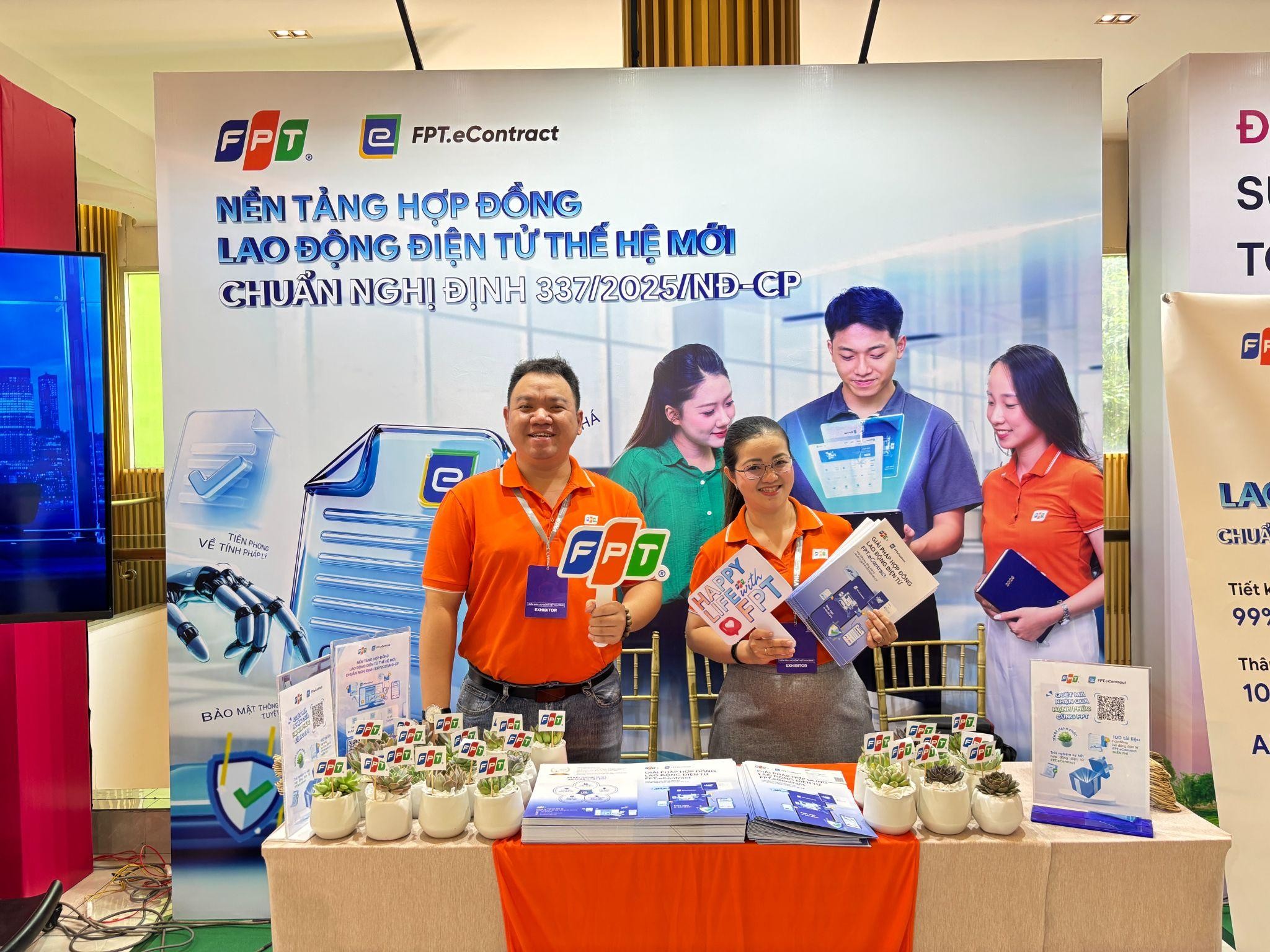

FPT Introduces FPT.eContract at the Exhibition Booth “Next-Generation Electronic Labor Contract Platform – Compliant with Decree 337/2025/ND-CP”
Through FPT.eContract, businesses can create and execute electronic labor contracts in bulk using HR data, monitor processing status in real time, and centrally manage employee records on a unified platform. Employees can receive, review, and sign contracts remotely on mobile devices without the need for face-to-face meetings.
The solution integrates eKYC processes, biometric authentication, and digital signature issuance into a closed-loop workflow, helping ensure legal validity and data security. The entire signing process is streamlined and does not require additional application installations, while also offering integration capabilities with HRM, ERP, or SAP systems for workforce data synchronization.
Developed in accordance with the requirements of Decree 337/2025/ND-CP, FPT.eContract meets standards for identification, authentication, digital signing, storage, and data security. The solution is also ready to connect with the electronic labor contract platform envisioned by state management authorities, helping businesses smoothly transition from paper-based records to digital labor management.
Over the years, FPT has been a strategic partner of VNHR, supporting the adoption of technology in human resource management and promoting modern management trends within the business community. Since 2022, FPT has continuously participated in VNHR’s key programs as both a Gold Partner and Strategic Partner. Through this partnership, FPT has not only shared emerging technology trends but also provided practical experience in the digital transformation of workforce management, contributing to improved operational efficiency and competitiveness for businesses in the digital economy.
With its comprehensive digital HR ecosystem and strong capabilities in mastering core technologies, FPT stands ready to accompany the business community in building modern HR management models, effectively leveraging workforce data, and adapting to technological and regulatory changes in the AI era.